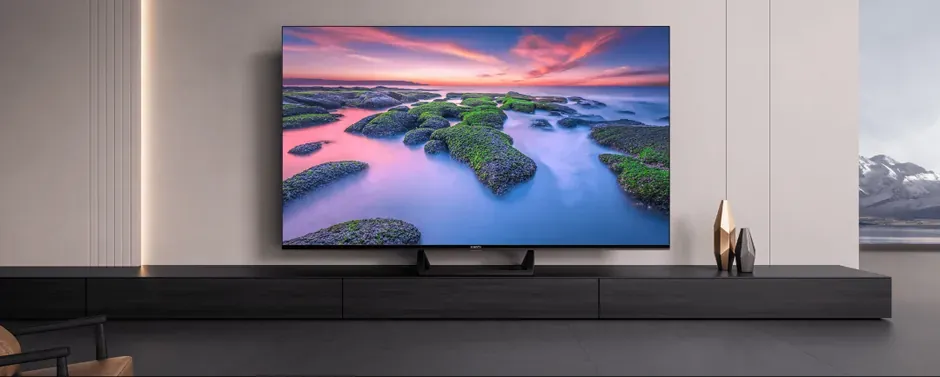
You’ve invested in the ultimate home theater centerpiece-an 85-inch, 90-inch, or even 98-inch television. It’s a stunning piece of technology that transforms your living room into a cinematic experience. Now comes the critical question: How do you safely mount a TV that weighs 90-150+ pounds on your wall?
This isn’t a standard TV mounting job. Large-format TVs present unique challenges that standard mounts, typical hardware, and DIY approaches simply cannot address. The consequences of inadequate mounting aren’t just damaged walls-they’re thousands of dollars of shattered television and potential injury.
At Express Mounting, we specialize in heavy-duty installations for oversized screens. We’ve safely mounted hundreds of 85-inch+ TVs across Metro Atlanta, and we understand exactly what it takes to keep your investment secure for years to come.
The Reality of Large TV Weights
Before diving into mounting solutions, let’s establish what we’re dealing with:
Current Large TV Weights (2024-2025 Models)
| TV Size | Example Model | Approximate Weight |
|---|---|---|
| 85 inch | Samsung QN85B | 90-105 lbs |
| 85 inch | LG OLED G4 | 72-85 lbs |
| 85 inch | Sony X90L | 85-95 lbs |
| 90 inch | Samsung QN900D | 95-110 lbs |
| 98 inch | Samsung QN90C | 125-140 lbs |
| 98 inch | TCL QM8 | 130-145 lbs |
| 100+ inch | Various | 140-170+ lbs |
And these weights are just the TV. Add a soundbar bracket, cable management weight, and the mount itself, and you’re easily looking at 150-200+ pounds of total wall load.
Why Standard TV Mounting Doesn’t Work for Large Screens
1. Weight Capacity Limitations
Most consumer TV mounts max out at 80-100 lbs. While your 85-inch TV might squeak under that limit, it leaves zero safety margin. Mount ratings assume:
- Perfect installation conditions
- No lateral forces (earthquakes, bumps, settling)
- Static weight only (no dynamic loading from adjustments)
Professional standards require minimum 1.5x safety factor-ideally 2x. An 85-lb TV should use a mount rated for 130-170+ lbs.
2. Lever Arm Physics
Large TVs extend further from the wall, creating significantly more rotational force on mounting hardware:
Physics reality:
- A 55-inch TV mounted 2” from wall creates X rotational force
- An 85-inch TV mounted 3” from wall creates 2.5-3X that force
- Full-motion mounts extending 18”+ multiply forces dramatically
This means wall anchors experience far more pull-out stress than weight alone suggests.
3. VESA Pattern Challenges
Large TVs use wide VESA patterns (often 400x300 to 600x400), which means:
- Mounting points spread across 24+ inches
- Stud spacing may not align with TV mounting holes
- Hitting both studs becomes geometrically challenging
- Single-stud mounting is dangerously inadequate
4. Wall Structure Stress
Large mounting brackets concentrate massive loads on small wall areas:
- Drywall crushing around fasteners
- Stud splitting from oversized loads
- Cumulative stress causing long-term failure
- House settling shifting loads unpredictably
Heavy-Duty Mounting Requirements
Structural Assessment
Every 85-inch+ installation begins with thorough structural evaluation:
Wall composition identification:
- Standard drywall over wood studs (most common)
- Drywall over steel studs (high-rises, commercial)
- Plaster and lath (older homes)
- Concrete or masonry (basements, commercial)
Stud analysis:
- Location mapping with professional-grade detection
- Quality assessment (checking for damage, splitting, or voids)
- Spacing verification (16” vs 24” on-center)
- Load-bearing wall identification
Obstruction mapping:
- Electrical wire locations
- Plumbing lines
- HVAC ductwork
- Fire blocks
Heavy-Duty Mount Selection
We use commercial-grade mounting systems for large TVs:
| Mount Type | Weight Capacity | Best For |
|---|---|---|
| Heavy-duty fixed | 200+ lbs | Maximum security, minimal profile |
| Heavy-duty tilt | 175+ lbs | Reducing glare, some adjustability |
| Heavy-duty full-motion | 150+ lbs | Flexible positioning, corner mounting |
| Recessed box systems | 200+ lbs | Flush appearance, concealed cables |
Key features we require:
- Solid steel construction (no stamped sheet metal)
- Multiple attachment points per stud
- Anti-tip safety mechanisms
- Locking position controls
Hardware Specifications
Standard TV mounting screws are wholly inadequate for heavy installations:
Our hardware requirements:
| Component | Standard Mount | Heavy-Duty Requirement |
|---|---|---|
| Lag bolts | #10 x 2.5” | 1/4” x 3.5”+ structural |
| Stud engagement | 1.5” | 2.5” minimum |
| Bolts per stud | 2 | 3-4 minimum |
| Total attachment points | 4 | 8-12 |
Reinforcement Options
When standard stud mounting isn’t sufficient, we implement reinforcement:
Blocking installation:
- Adding horizontal lumber between studs
- Creating solid mounting surface across multiple studs
- Distributing load over larger area
Wall plate reinforcement:
- Metal backing plates spread load
- Reduce point-stress on drywall
- Prevent crushing and long-term settling
Header beam mounting:
- For extreme weights or problematic walls
- Structural lumber installed in wall cavity
- Provides rock-solid foundation
Two-Person (or More) Installation Requirement
Here’s an uncomfortable truth: You cannot safely install an 85-inch+ TV alone.
Why Solo Installation Is Dangerous
Weight handling:
- 90+ lbs is challenging for one person to lift
- Controlling a large, unwieldy panel while positioning is nearly impossible
- Fatigue increases drop risk dramatically
Alignment requirements:
- Large TVs require simultaneous alignment at multiple points
- One person cannot hold the TV while adjusting position
- Bracket engagement requires precise vertical and horizontal positioning
Safety concerns:
- Dropping a large TV causes serious injury
- Wall damage from failed mounting attempts
- Property damage to floors, furniture, and the TV itself
Our Team Approach
For 85-inch+ installations, we send minimum two technicians, often three for 98-inch+ screens:
- Technician 1: Leads mounting, handles bracket alignment
- Technician 2: Supports TV weight, assists positioning
- Technician 3 (large screens): Cable management, safety oversight
This team approach ensures safe, damage-free installation regardless of TV size.
Special Considerations for Different Wall Types
Wood Stud Walls (Standard Construction)
Challenges:
- Stud spacing may not match VESA pattern
- Wood quality varies (especially in older homes)
- Splitting risk with oversized fasteners
Our solutions:
- Blocking installation when stud spacing is wrong
- Pre-drilling to prevent splitting
- Multiple fasteners per stud for redundancy
- Inspection for stud damage before mounting
Steel Stud Walls (High-Rises and Condos)
Challenges:
- Steel studs have limited pull-out strength
- Standard lag bolts don’t work
- Toggle systems required but have limitations
Our solutions:
- Heavy-duty steel stud toggle systems (not standard toggles)
- Multiple toggles per mounting point
- Evaluation for blocking installation feasibility
- Sometimes recommend alternative mounting approaches
Concrete and Masonry Walls
Challenges:
- Requires specialized drilling equipment
- Anchor selection critical for safety
- Cracking risk in older concrete
Our solutions:
- Hammer drill with proper masonry bits
- Wedge anchors or sleeve anchors rated for loads
- Multiple anchor points exceeding minimum requirements
- Load testing before TV installation
Plaster and Lath Walls (Older Atlanta Homes)
Challenges:
- Hidden stud detection is difficult
- Lath strips confuse stud finders
- Plaster crumbles around fasteners
Our solutions:
- Manual stud confirmation techniques
- Washer plates to distribute surface loads
- Longer fasteners to reach solid structure
- Extra care in drilling to prevent plaster damage
Cable Management for Large TVs
Large TVs mean more cables-and more visible cables at that larger scale:
Typical Cable Requirements
- Power cable (often proprietary on large TVs)
- Multiple HDMI (cable box, streaming, gaming, Blu-ray)
- Ethernet (for smart TV functionality)
- Optical audio (to soundbar or receiver)
- Component/composite (legacy devices)
- USB (for media playback)
In-Wall Concealment Challenges
Large TVs require more cable capacity:
- Larger pass-through holes
- Bigger in-wall cable boxes
- Potential electrical relocation
- Extended cable runs to reach floor level
Our Large-TV Cable Solutions
In-wall power relocation:
- New outlet installed directly behind TV
- UL-listed in-wall power kits
- Code-compliant installation
Low-voltage cable management:
- Large-capacity in-wall cable routing
- Cable pass-throughs with grommets
- Organized internal runs with labeling
External options (when in-wall isn’t possible):
- Commercial-grade cable raceways
- Painted to match wall color
- Sized appropriately for cable volume
Heavy-Duty TV Mounting Service Packages
Large TV Standard Installation
Starting at $349
- Professional mounting on wood stud walls
- Heavy-duty commercial mount (if supplied)
- Basic cable management
- Two-technician team
- TVs 85-90”
Large TV Premium Installation
Starting at $499
- Everything in Standard, plus:
- In-wall cable concealment
- Power outlet relocation
- Extended warranty support
- TVs 85-90”
Extra-Large TV Installation (98”+)
Starting at $649
- Three-technician team
- Structural assessment and reinforcement as needed
- Premium heavy-duty mounting system
- Complete in-wall cable management
- Power relocation included
Challenging Wall Installation
Starting at $549
- Steel stud, concrete, or masonry walls
- Specialized hardware and techniques
- Structural reinforcement included
- Any TV size 85”+
Full Home Theater Integration
Custom pricing
- Large TV mounting
- Surround sound system installation
- Streaming device setup
- Universal remote programming
- Complete cable management
What Could Go Wrong: Real Examples
We’ve been called to fix plenty of failed large-TV installations. Here’s what we see:
The “It Seemed Secure” Failure
Scenario: 85-inch TV mounted with standard mount and hardware
What happened: Six months later, during a party, the TV slowly tilted forward and crashed
Cause: Drywall gradually crushed around standard screws, loosening over time
Cost: $4,500 TV destroyed, $800 wall repair, embarrassment
The Single-Stud Disaster
Scenario: 90-inch TV mounted to one stud (other side used drywall anchors)
What happened: Anchor side pulled out immediately when mount was adjusted
Cause: Drywall anchors cannot handle the leverage forces of large TVs
Cost: $5,200 TV destroyed, ankle injury from falling debris
The DIY Gone Wrong
Scenario: Homeowner mounted 85-inch TV after watching YouTube tutorials
What happened: Bracket was level, but TV wouldn’t hang properly
Cause: Studs weren’t plumb; bracket needed shimming to compensate
Result: TV returned, professional installation hired (should have started there)
Frequently Asked Questions
How much weight can a wall-mounted TV bracket really hold?
Quality heavy-duty brackets hold 150-250 lbs when properly installed. The limitation is usually the wall structure, not the bracket. Our installation ensures wall-side anchoring matches bracket capability.
Can drywall alone support an 85-inch TV?
No. Drywall crumbles under significant loads. Large TVs must attach to structural studs, concrete, or properly installed blocking. There are no drywall-only solutions for heavy TVs.
Do I need to reinforce my wall for a large TV?
It depends on your wall structure. Standard wood stud walls usually don’t need reinforcement if studs align well. Steel stud walls, misaligned studs, or problematic conditions may require blocking installation.
How long does heavy-duty TV installation take?
Standard installations: 2-3 hours. Installations requiring structural work, extensive cable management, or challenging wall conditions: 3-5 hours.
Can you mount a 98-inch TV on a full-motion mount?
Yes, but we’re selective about which mounts we use. The mount must be rated appropriately, the wall structure must be solid, and we typically recommend limiting extension use to prevent excessive leverage forces.
What if my TV is too heavy for my wall?
Options include:
- Installing structural blocking to create solid mounting
- Using a floor-standing mount designed for large TVs
- Mounting on a different wall with better structure
- Creating a feature wall with proper backing
Is there a TV too big to wall mount?
Commercially available TVs up to 115+ inches can be wall-mounted with proper technique and structural support. The question is usually about practical viewing distance and room size, not mounting capability.
Service Areas for Heavy-Duty TV Installation
We provide large TV mounting throughout Metro Atlanta:
North Atlanta: Alpharetta, Roswell, Johns Creek, Milton, Cumming, Dunwoody, Sandy Springs
Central Atlanta: Buckhead, Midtown, Brookhaven, Virginia-Highland, Decatur
East Atlanta: Tucker, Stone Mountain, Lawrenceville, Snellville
West Atlanta: Marietta, Smyrna, Vinings, Kennesaw, Acworth
South Atlanta: Peachtree City, Fayetteville, Newnan, McDonough
Protect Your Investment with Professional Installation
Your 85-inch+ TV represents a serious investment-often $3,000 to $10,000 or more. The mounting installation is not the place to cut corners.
Express Mounting provides:
✅ Experienced teams trained specifically for large-TV installations
✅ Commercial-grade hardware that exceeds weight requirements
✅ Structural assessment to ensure your wall can handle the load
✅ Insurance coverage protecting your TV and property
✅ Workmanship guarantee backing our installation quality
✅ Clean, professional results worthy of your premium television
Don’t risk your expensive TV on inadequate mounting. Let the professionals handle it right the first time.
👉 Visit ExpressMounting.com to schedule your large TV installation consultation.
📍 Express Mounting - Atlanta’s heavy-duty TV mounting specialists for 85-inch screens and larger.