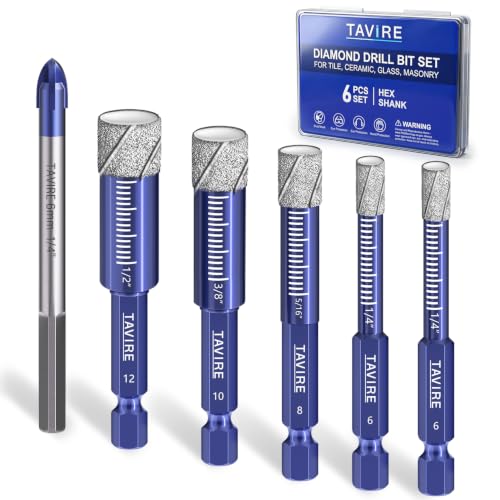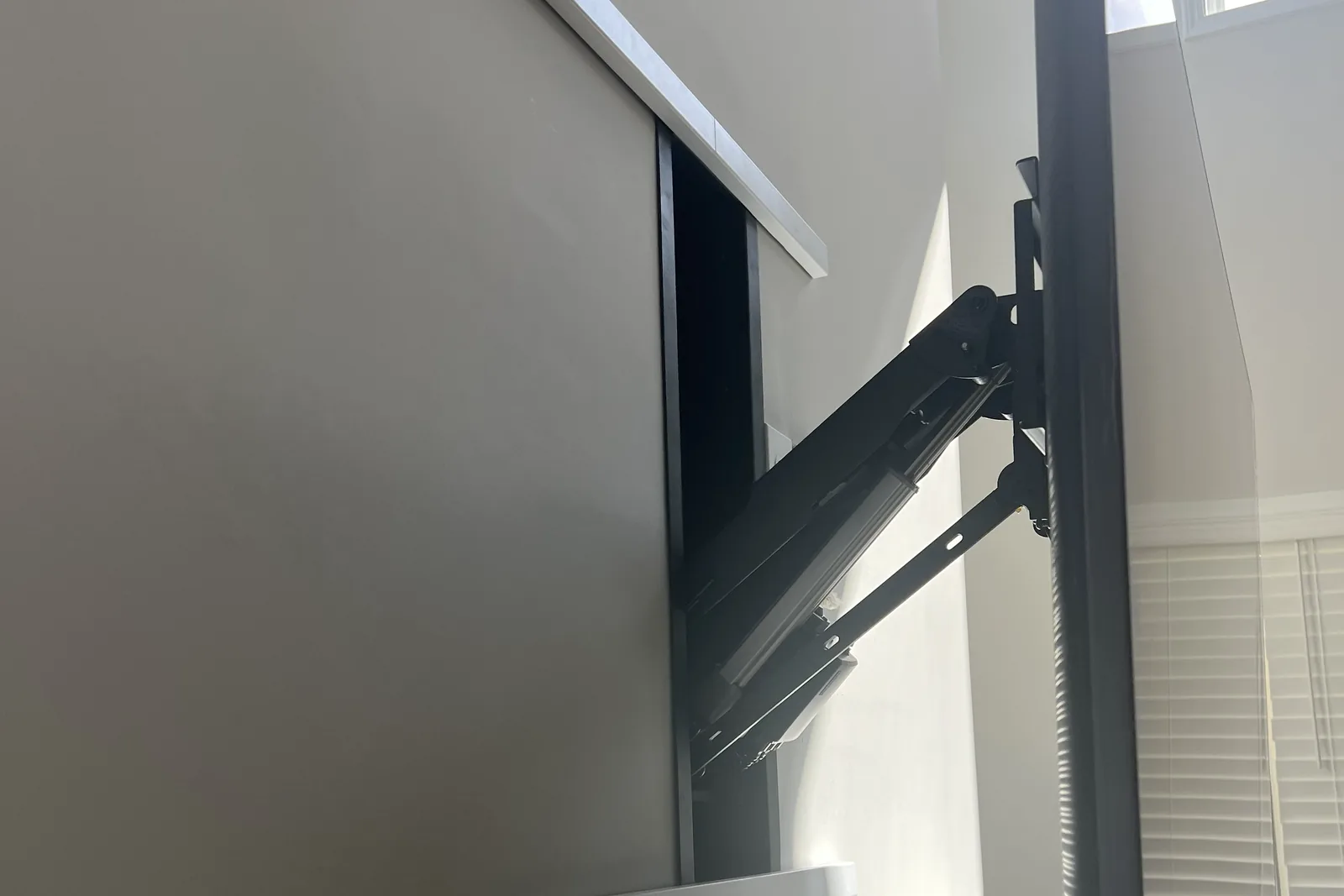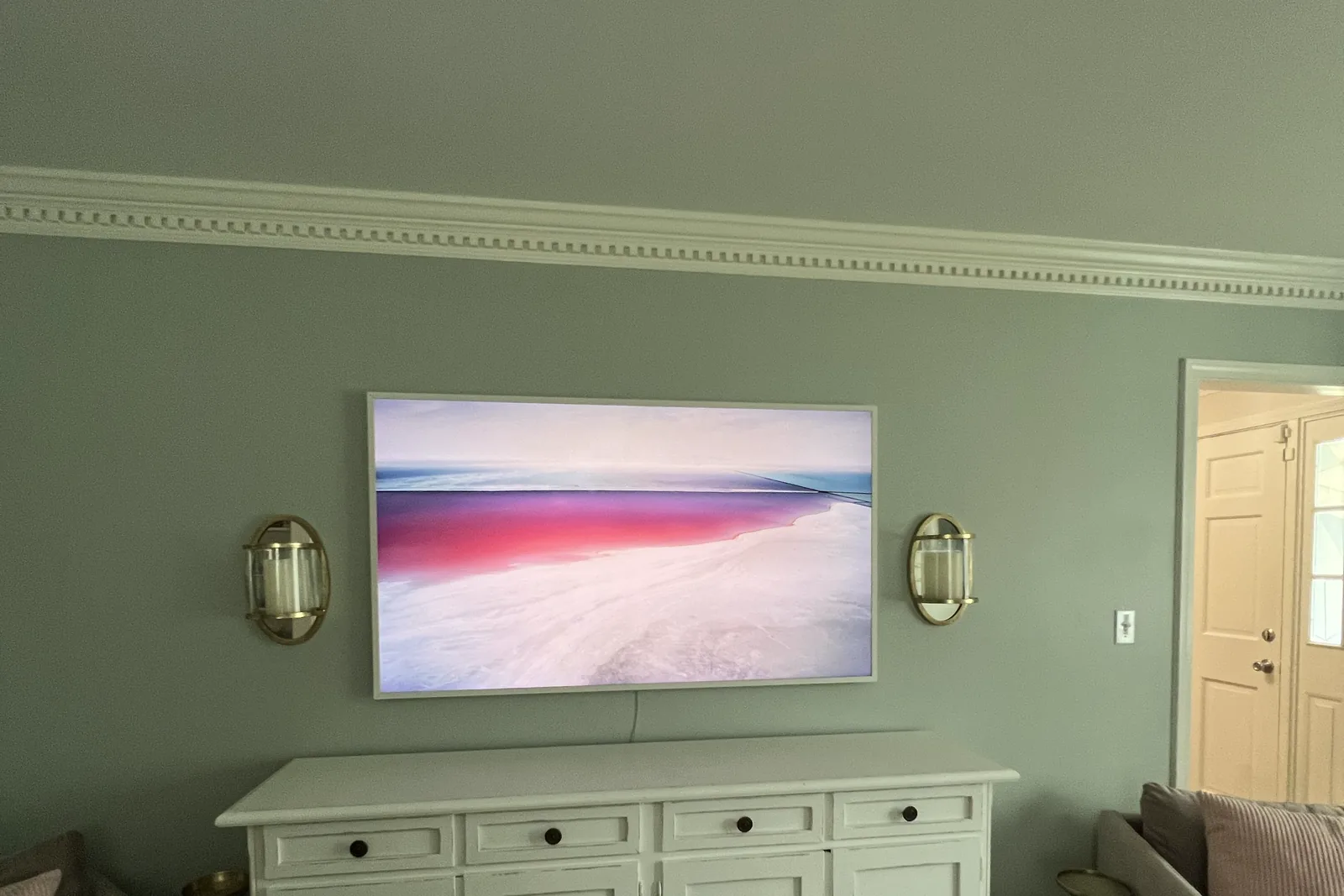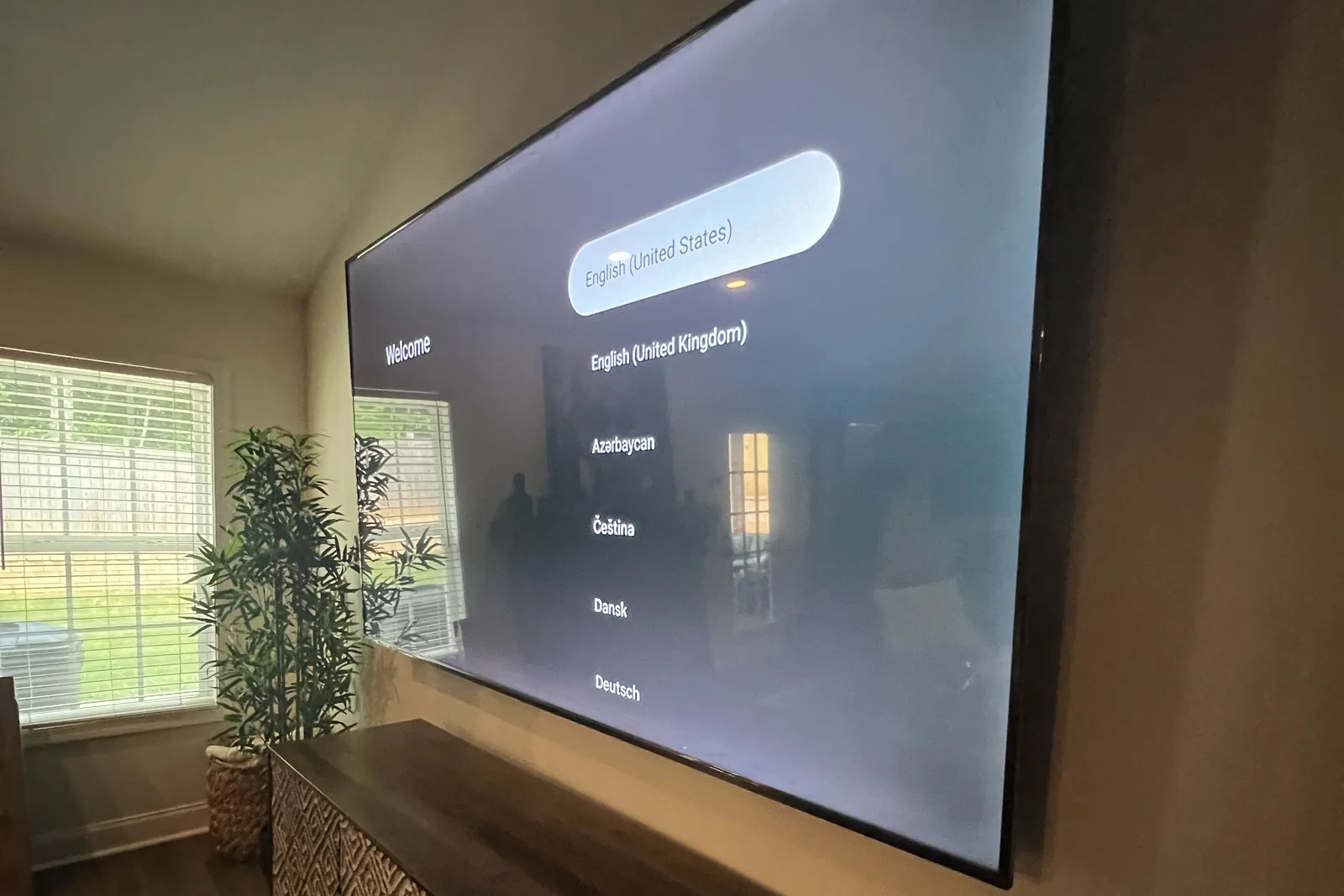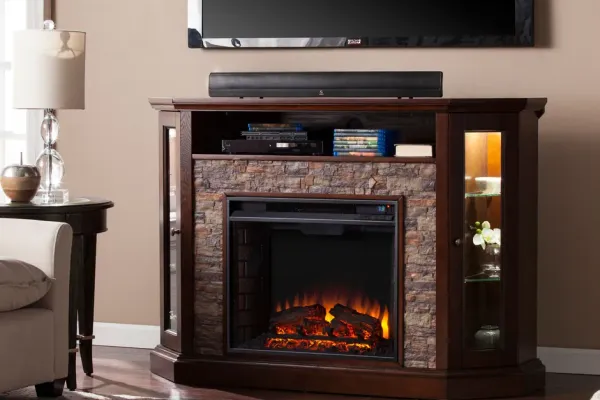
Mounting a TV on stone, brick veneer, river rock, or stacked-stone fireplace surrounds requires three professional techniques: diamond-tipped drilling where the mount’s holes land (into sound stone or a full mortar joint, never a cracked or loose stone), backer plate construction to bridge uneven surfaces, and load-bearing assessment to identify whether the substrate is structural or decorative veneer. On our price list, stone or brick adds $99 to the flat rate for your TV’s size. Across 9,747+ installs since 2015, cracked stone facades and pulled-out anchors are the most expensive avoidable failures in this category.
Quick note: This page contains Amazon affiliate links. We may earn a small commission at no extra cost to you if you buy through them. Our picks are the hardware our crews install on real customer walls, not spec-sheet guesses.
That gorgeous stone fireplace surround, the stunning stacked stone accent wall, or the charming exposed brick in your Atlanta home creates incredible visual impact. It also creates a TV mounting nightmare.
Stone and uneven surfaces present challenges that send most DIYers running-and rightfully so. Improper mounting on these materials risks:
- Cracked or damaged stone (often irreparable)
- Failed mounts that pull out of porous material
- Crooked installations on textured surfaces
- Visible cables with no easy concealment path
- Voided warranties from incorrect techniques
At Express Mounting, we specialize in these exact scenarios. Stone fireplaces, brick walls, ledger stone, river rock and other irregular surfaces are a regular part of our work across Metro Atlanta. Here’s what you need to know about mounting on difficult surfaces-and why professional installation makes the difference.
Types of Challenging Wall Surfaces
| Surface | Difficulty | What it demands |
|---|---|---|
| Natural stone (granite, slate, travertine) | High | Diamond-tipped bits, slow speeds, crack management |
| Stacked / ledger stone | Very high | Depth mapping per stone; voids behind panels |
| Solid brick | Medium-high | Drill the brick face or the mortar joint, whichever lines up with the mount’s holes |
| Brick veneer | High | Must reach the structure behind the veneer skin |
Natural Stone
Examples: Granite, marble, slate, limestone, travertine
Characteristics:
- Extremely hard and brittle
- Requires diamond-tipped drilling
- Cracking risk during installation
- Often installed over substrate material
Mounting difficulty: High
Stacked Stone / Ledger Stone
Examples: Cultured stone, natural stacked stone, thin veneer panels
Characteristics:
- Irregular depth and surface
- Individual stones vary in thickness
- May be hollow behind stones
- Mortar joints complicate placement
Mounting difficulty: Very High
Brick (Solid)
Examples: Traditional clay brick, concrete brick
Characteristics:
- Moderately hard material
- Mortar in older brick can be soft or crumbly, so check a joint before anchoring in it
- Hollow cores in some types
- Older brick may be crumbly
Mounting difficulty: Medium-High
Brick Veneer
Examples: Thin brick facing, brick tile
Characteristics:
- Thin material over substrate
- Cannot support loads alone
- Must anchor through to backing
- Easy to crack or dislodge
Mounting difficulty: High
For a deeper dive on identifying material types before drilling, see our drilling into brick vs stone veneer safety guide.
River Rock / Irregular Stone
Examples: Natural river rock, cobblestone, fieldstone
Characteristics:
- Extremely uneven surfaces
- Rounded profiles prevent flat mounting
- Gaps between stones vary
- Structural backing often inconsistent
Mounting difficulty: Very High
Stone Veneer Over Drywall
Examples: Manufactured stone panels, AirStone, cultured stone
Characteristics:
- Decorative surface cannot bear loads
- Must mount through to studs or backing
- Extended fasteners required
- Risk of cracking veneer
Mounting difficulty: Medium-High
Why DIY Stone Mounting Fails
Mistake #1: Wrong Drill Bit
Standard masonry bits designed for concrete will not work on most stone:
- Carbide bits overheat and dull on hard stone
- Diamond-tipped bits are required for granite and similar materials
- Wrong bit selection causes:
- Excessive drilling time
- Overheating and cracking
- Off-center holes
- Bit breakage inside stone
You’ll also need a real SDS Plus rotary hammer drill to drive these bits cleanly. Standard cordless drills lack the impact energy and chuck system to seat diamond and core bits properly.
Mistake #2: Picking the Hole Before Checking the Material
Many DIYers pick the “easy” spot every time, always the mortar or always the stone, instead of looking at where the mount’s holes actually land.
The rule we work by: on brick, drill the brick face or the mortar joint, whichever lines up with the mount’s holes. On stone, anchor into sound stone or a full, solid mortar joint. What fails is material that is already failing:
- Crumbly old mortar that powders when you drill it
- A cracked or loose stone
- A hollow pocket behind a veneer
Check each spot before you commit to it.
Mistake #3: Using Standard Anchors
Plastic expansion anchors and standard concrete screws fail in stone:
- Stone doesn’t grip expansion anchors properly
- Sleeve anchors require precise hole sizing
- Hollow spaces behind stone prevent proper anchor engagement
- Chemical anchors often required for reliable hold
Mistake #4: Ignoring Substrate
What’s behind your stone matters as much as the stone itself:
Common substrates:
- Concrete block (good for anchoring)
- Wood framing (requires reaching through stone)
- Metal studs (challenging)
- Air gap/hollow space (problematic)
- Cement board (limited holding power)
Drilling through stone without knowing the substrate leads to failed installations.
Mistake #5: Level Assumptions
On flat drywall, a level bracket creates a level TV. On irregular stone:
- Surface depths vary by 1-3 inches or more
- Mounting points may be at different depths
- Shimming and spacing required for level installation
- Standard mounts may not accommodate depth differences
Professional Stone Mounting Techniques
Technique 1: Through-Bolt Mounting
Used when: Substrate behind stone can accept bolts
Process:
- Identify solid substrate areas behind stone
- Drill through stone and substrate with appropriate bits
- Install through-bolts that clamp both sides
- Distribute load across substrate, not stone alone
Advantages:
- Maximum holding power
- Doesn’t rely on stone strength
- Works with most substrates
Technique 2: Tapcon / Masonry Screw Mounting
Used when: Stone is solid and thick enough for screw engagement
Process:
- Pre-drill holes with proper masonry bit
- Clean holes of debris
- Drive the Tapcon screws until they seat
- Avoid over-tightening (cracks stone)
For homeowners attempting basic brick or solid stone installs, the stone-rated Tapcon masonry screws we use for veneer applications are the right starting point.
Advantages:
- Clean appearance (no visible hardware)
- Works on solid brick and concrete
- Simpler than through-bolt systems
Technique 3: Sleeve Anchor Mounting
Used when: Concrete block or solid masonry behind stone
Process:
- Drill precise diameter holes through stone
- Clean holes thoroughly
- Insert sleeve anchors
- Tighten to the anchor maker’s rating
Advantages:
- High load capacity
- Expansion grip in solid material
- Industry standard for heavy loads
Technique 4: Chemical Anchor Mounting
Used when: Stone is porous, cracked, or of uncertain quality
Process:
- Drill oversized holes
- Clean holes of dust and debris
- Inject two-part epoxy or chemical anchor
- Insert threaded rod or anchor
- Allow curing time before loading
Advantages:
- Works in compromised material
- Creates custom anchor points
- Exceptional holding power when cured
- Fills voids in porous stone
Technique 5: Mounting Plate Systems
Used when: Uneven surfaces prevent direct mounting
Process:
- Create flat mounting surface using specialty brackets
- Install plate with adjustable standoffs
- Account for depth variation across mounting area
- Achieve level despite surface irregularity
Advantages:
- Solves uneven surface problems
- Creates standard mounting platform
- Allows use of standard TV brackets
- Accommodates extreme irregularity
Stone Fireplace TV Mounting: Special Considerations
Stone fireplaces are the most common difficult-surface mounting location-and present additional challenges:
Heat Exposure
Stone absorbs and radiates heat from fireplaces:
Assessment requirements:
- Infrared temperature testing with fire burning
- Measurement at proposed TV location
- Heat accumulation over time evaluation
Safe temperature limits:
- Check the operating range in your TV’s manual
- Our own line: a wall reading over 100°F at the TV location needs mitigation or another spot
- Extended heat exposure degrades electronics
Mitigation options:
- Mounting higher above heat source
- Installing mantel heat deflector
- Using recessed mounting with ventilation
- MantelMount pull-down systems to bring the TV down to eye level once the wall passes the heat check
Structural Questions
Stone fireplace surrounds vary in construction:
Common structures:
- Solid masonry (best for mounting)
- Stone veneer over cement board
- Stone veneer over wood framing
- Hollow spaces behind decorative stone
We probe behind stone (when possible) to understand what we’re working with before drilling.
Aesthetic Considerations
Stone fireplaces are often home focal points:
- Mounting should enhance, not detract
- Bracket visibility matters more on beautiful surfaces
- Cable concealment options may be limited
- Some clients prefer visible cables to drilling additional holes
Cable Concealment on Stone Surfaces
Hiding cables on stone walls requires creative solutions. For a broader look at concealment strategies across all surfaces, see how to hide HDMI and power cables:
Option 1: Surface-Mounted Raceways
What it is: Plastic or metal channels mounted on stone surface
Advantages:
- No additional drilling
- Removable/adjustable
- Various color options
Disadvantages:
- Visible on surface
- May not follow stone contours
- Adhesive may not stick to textured surfaces
Option 2: Mortar Joint Routing
What it is: Cables routed through removed mortar, repointed afterward
Advantages:
- Nearly invisible
- No surface attachment
- Clean professional appearance
Disadvantages:
- Labor intensive
- Requires color-matched mortar
- Limited to mortar joint paths
Option 3: Behind-Stone Routing
What it is: Cables routed through hollow spaces behind stone
Advantages:
- Completely hidden
- No surface modification
- Clean appearance
Disadvantages:
- Only possible with hollow-backed installations
- Requires access points
- May not be feasible with solid stone
Option 4: Decorative Cord Covers
What it is: Fabric sleeves or decorative covers that blend with decor
Advantages:
- No drilling required
- Easy installation
- Can complement aesthetic
Disadvantages:
- Still visible
- May not match stone aesthetic
- Less “finished” appearance
Service Packages for Stone and Difficult Surfaces
Stone, brick and other masonry walls follow our published price list: the flat rate for your TV’s size, plus the $99 masonry surcharge.
| What | Price |
|---|---|
| TV up to 54” | $129 |
| TV 55-69” | $159 |
| TV 70-79” | $209 |
| TV 80-99” | $299 |
| TV 100” and up | $399 |
| Masonry surcharge (stone, brick, stacked stone, block) | +$99 |
| In-wall wire concealment, where there is a cavity | +$99 |
| Surface raceway instead | +$79 |
| Pull-down (MantelMount) assembly, you supply the mount | +$99 |
A 50-inch TV on solid brick is $129 + $99 = $228. A 65-inch TV over a stone fireplace with the wires hidden is $159 + $99 + $99 = $357; put it on a MantelMount and it’s $456 ($159 + $99 + $99 + $99).
Custom mounting-plate fabrication for river rock and other extreme surfaces, and heat-mitigation work, are quoted before we start. For 85-inch-plus panels, see our heavy-duty TV mounting guide.
Canonical Express Mounting masonry pricing
Basic mount $129 (up to 54”). $159 (55-69”). $209 (70-79”). $299 (80-99”), $399 (100”+). Masonry surcharge +$99 for stone, brick, or stacked stone (covers diamond core bits, expansion anchors, and backer plate when needed). Cable concealment +$99/TV. A typical Atlanta stone fireplace install runs $228 to $597: $228 for a TV up to 54 inches with the masonry surcharge ($129 + $99), up to $597 for a 100-inch-plus TV on stone with the wires hidden ($399 + $99 + $99). Call (470) 777-4077.
Frequently Asked Questions
Can you drill into stacked stone without cracking it?
Yes, with a low-RPM hammer drill and a diamond-tipped bit, drilling where the mount’s holes land: into a sound stone or a full, solid mortar joint, never a cracked or loose stone. Cracking happens when installers force standard masonry bits through brittle stacked stone at high speed. We probe each anchor point first and pick the largest, most stable stones or mortar bridges before committing to a hole location.
Do I need a special drill bit for river rock?
Yes. River rock requires a diamond-tipped core bit, not a standard carbide masonry bit. The rounded, dense, often quartz-rich composition of river rock dulls and overheats carbide bits within seconds, which causes the bit to skate across the surface and chip the stone. Diamond bits with continuous water cooling produce clean holes without cracking. The diamond core drill bits we use on stone and masonry outlast carbide by a wide margin on river rock and granite.
What is the cost of mounting a TV on a stone fireplace?
It’s the flat rate for your TV’s size plus the $99 masonry surcharge: $228 for a TV up to 54 inches ($129 + $99), $258 for 55-69 inches ($159 + $99), and $357 for a 65-inch TV on stone with the wires hidden ($159 + $99 + $99). A pull-down mount adds $99; custom plate fabrication for river rock and heat-mitigation work are quoted before we start.
How do you handle uneven stone surfaces?
We build a backer plate or use adjustable standoffs to bridge the surface variation. Stacked stone, river rock, and ledger panels can vary 1-3 inches in depth across the mounting footprint, so we install a flat steel or aluminum plate anchored at multiple points into solid substrate, then attach the TV bracket to that plate. This creates a level mounting surface regardless of how irregular the stone is. For DIYers, a pre-made TV mount plywood backer plate kit is a budget-friendly starting point on moderately uneven surfaces.
Can any TV be mounted on stone?
Yes, with proper technique. The question is whether the stone and its substrate can safely hold the TV weight with appropriate anchoring.
Will drilling crack my stone?
Improper drilling can crack stone, especially brittle materials like slate or thin veneer. Professional drilling with correct bits, speeds, and techniques minimizes this risk significantly.
How do you find studs behind stone?
Stud finders don’t work through stone. We use:
- Construction knowledge of typical backing
- Small exploratory holes in inconspicuous locations
- Borescope inspection when possible
- Building plan review when available
Can you mount on stacked stone without damage?
Usually yes, but technique is critical. We select anchor points on larger, more stable stones and use appropriate anchoring for the substrate behind the stone.
Is it safe to mount above a working fireplace?
With proper heat assessment and mitigation, yes. We test temperatures and recommend solutions ranging from higher mounting to MantelMount pull-down systems. For more on this topic, see our complete guide to mounting a TV over a fireplace.
How long does stone mounting take?
Longer than standard installations due to complexity:
- Basic stone: 2-3 hours
- Complex/irregular stone: 3-4 hours
- Stone fireplace with heat assessment: 3-5 hours
Can you remove a TV from stone later without visible damage?
Minor holes remain where anchors were placed. These can often be filled with color-matched stone filler, though some visibility may remain depending on stone type.
Do you guarantee the installation won’t damage my stone?
We take extensive precautions: every stone wall gets a surface read and a test hole in an inconspicuous spot before the mounting holes go in, and our 3-year workmanship warranty covers the work we did.
Areas We Serve for Stone Wall Mounting
We provide stone and difficult surface TV mounting throughout Metro Atlanta:
North Atlanta: Alpharetta, Roswell, Johns Creek, Milton, Cumming, Dunwoody
Central Atlanta: Buckhead, Midtown, Brookhaven, Virginia-Highland, Decatur
East Atlanta: Tucker, Stone Mountain, Lawrenceville
West Atlanta: Marietta, Smyrna, Vinings, Kennesaw
South Atlanta: Peachtree City, Fayetteville, Newnan
Don’t Risk Your Stone-Or Your TV
Beautiful stone surfaces deserve careful, knowledgeable installation. Amateur attempts risk:
- Cracked and damaged stone (expensive to repair)
- Failed mounts and fallen TVs
- Unsightly patches from wrong-location drilling
- Compromised stone structural integrity
Express Mounting brings specialized tools, proven techniques, and extensive experience with Atlanta’s stone surfaces:
✅ Diamond-tipped drilling equipment for all stone types
✅ Chemical anchoring systems for maximum holding power
✅ Custom mounting solutions for uneven surfaces
✅ Heat assessment expertise for fireplace installations
✅ 3-year workmanship warranty on every install
Your stone wall deserves better than guesswork. Trust the specialists.
👉 Visit ExpressMounting.com to schedule your stone wall TV mounting consultation.
📞 Call or text (470) 777-4077 for a same-day quote on stone, brick, or uneven surface TV mounting in Metro Atlanta.
📍 Express Mounting - Atlanta’s stone and difficult surface TV mounting experts.
Stone and brick walls vary street by street across the metro. Per-city wall types and pricing are on our local pages: Marietta, Roswell, Buckhead and Cumming, or start from the Atlanta hub.
Written by Alex Crabinsky, founder of Express Mounting, whose crews have completed 9,747+ TV installs since 2015.