Skip to content
Same-Day Service · Free Estimates Text a photo

TV mounting services in The Avenues, UT

The Avenues TV mounting is flat-rate: $129 up to 54", $159 for 55-69", $209 for 70-79", $299 for 80-94", $399 for 95-inch and up (2 technicians). Cable concealment is $99 per TV, brick or stone adds $99. Same-day slots when booked before noon, and the installer usually arrives within 2-4 hours of your confirmation.

“We called and requested a same day service and they were able to accommodate, even on a Friday.”
Kelly Bell, Google review of an Atlanta install

Updated

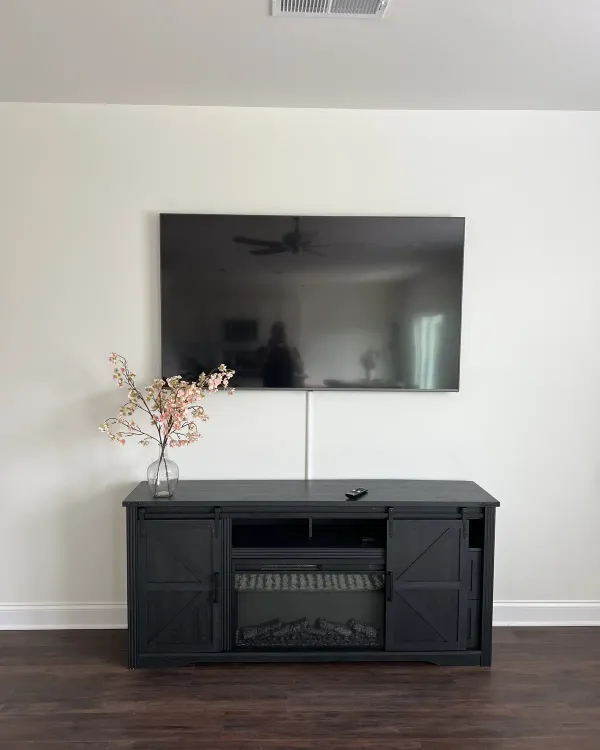
A TV on a flat mount on a white wall next to a black media cabinet

Documented install, February 2025 By the Atlanta crew.

TV Mounting Cost Estimate

Step 1 of 520%
How big is the TV?
One TV.

Rather we call you?

Leave your number, and we call you about your TV, any day from 8:00 AM to 8:00 PM. Add a note on the wall or the TV if you like.

Contact Information

Helps us match you with the installer closest to you.

The Avenues is Salt Lake City's first neighborhood, surveyed in the early 1850s on blocks half the size of the city grid, with lettered streets from A to U crossing numbered avenues that climb the foothills north of South Temple. Most of its houses went up between about 1880 and 1920, so the wall to expect on the Lower Avenues is plaster-and-lath, over wood studs or against old brick that may be unreinforced masonry. Above 13th Avenue the later view houses are more likely drywall over stud. Your Express Mounting installer tests first, then works with a rare-earth magnet and 5/16-inch lag bolts for plaster walls, a hammer drill and 1/4-inch Tapcon anchors for sound brick, and toggles for apartment walls that prove to be steel. Same-day service in the Avenues when booked before noon.

What Express Mounting Customers Say

Google reviews of our Atlanta installs

They installed my TV on my deck in less than 30 minutes. Very professional and neat.

Alexandru Surugiu

Google review

AS
Very knowledgeable and sharp. They installed my TVs on the walls and configured my home network. Highly recommend!

George

Google review

G
Great service done by true experts. Fast and accurate, serviced next day. They also provided some nice heavy duty brackets. Highly recommend for any TV mounting needs. They also got me a very reasonable price.

Anastasia Ceclu

Google review

AC

Look us up before you book

Express Mounting has one Google Business Profile, at our Alpharetta, GA headquarters. Customer reviews for every metro we serve live there.

Salt Lake City installs are done by local installers we dispatch, on the same flat rates and the same warranty.

28 Google reviews, every one on that profile, from customers of the Atlanta crew.

Every booking comes with

  • 3-year workmanship warranty
  • Same-day installation when you book before noon
  • An installer typically arrives within 2-4 hours of confirmation

Small blocks, lots split four ways: why every Avenues wall gets its own test

The Avenues was the first part of Salt Lake City to break from the ten-acre block. Its blocks are about 2.5 acres, laid out at first with four lots each, and the owners later split those lots again. That is where the variety comes from. On the Lower Avenues a tall Queen Anne can stand near a small cottage, a Prairie Style house and an apartment building, each from a different decade and a different builder. The city counts more than one hundred architect-designed homes in the district. For a TV installer the lesson is plain: the house next door tells you nothing about yours. Most Avenues houses were built between about 1880 and 1920, and nearly half the buildings in the neighborhood predate 1920, so plaster is the starting assumption. Then the wall is tested. A magnet pass looks for rows of nails. A knock compares one wall with the next. A 1/8-inch pilot hole behind where the TV will hang shows wood, brick or a hollow, and only then is the hardware chosen, with the bracket matched to the TV's VESA pattern and weight.

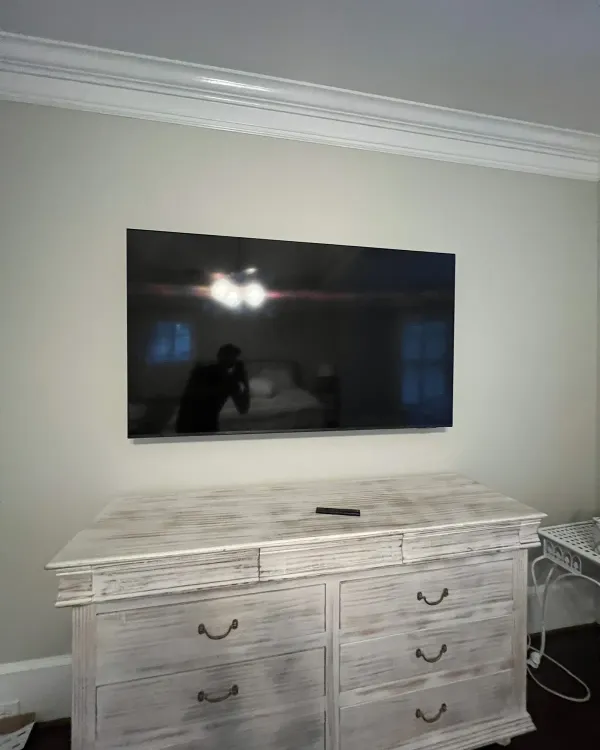
A TV on a flat mount on a gray wall next to a whitewashed dresser

Lower Avenues plaster-and-lath: lag bolts into the studs a magnet finds

Below 11th Avenue the older Victorian-era houses set the pattern. A house from the trolley years (horse-drawn cars by 1872, electric lines from 1889) is treated as plaster over wood lath until a pilot hole says otherwise. In a frame house, and in the dividing walls of most brick ones, wood studs sit behind that plaster. Lath runs unbroken across the wall, so an electronic stud finder reads wood everywhere. The installer slides a rare-earth magnet over the surface until it snaps to a nail, then follows the nails upward. A straight vertical line of them is a stud. Old framing does not always keep 16-inch spacing, so each stud is found separately. Painter's tape goes over each mark, the drill runs slowly in plain rotation, and the pilot is stepped up in two sizes so the finish coat does not chip. Then 5/16-inch lag bolts seat in the wood, snugged by hand at the end because plaster crushes under too much torque. A 55-inch screen takes two. Anything past 65 inches gets four across two studs. Plaster carries no surcharge. Plan on 60 to 85 minutes.

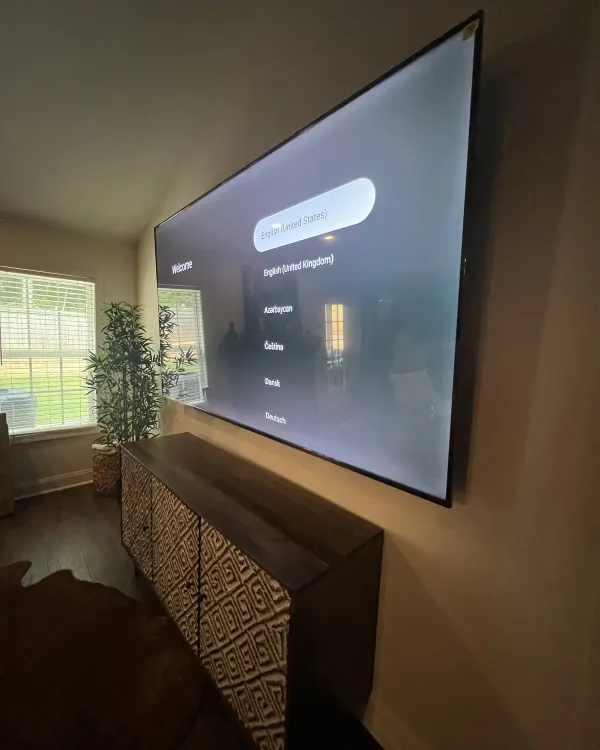
A TV on a gray bedroom wall, a plant in the corner by the window

Old Avenues brick: checking for unreinforced masonry before a Tapcon goes in

Some Avenues houses are frame and some are brick, and in a brick house from before the 1970s the outside walls may be the brick itself with plaster on the inside face. Utah's earthquake program describes such walls as unreinforced masonry: brick with few or no steel reinforcing bars. From the street, a course of bricks laid end-on every fifth or sixth row is a hint. From inside, a wall that sounds solid everywhere and shows the magnet no nail rows is another. The proof is a 3/16-inch test hole. The installer watches the dust color, which separates brick from mortar, and the feed rate, since a bit that sinks with no push is in soft mortar. Sound brick takes a 1/4-inch Tapcon in the brick face or the mortar joint, whichever lines up with the mount holes. A brick fireplace wall above the mantel is tested the same way. If the wall does not pass, you hear so before the TV goes up, and a dividing wall with studs becomes the plan. Brick is masonry, so the +$99 surcharge applies.

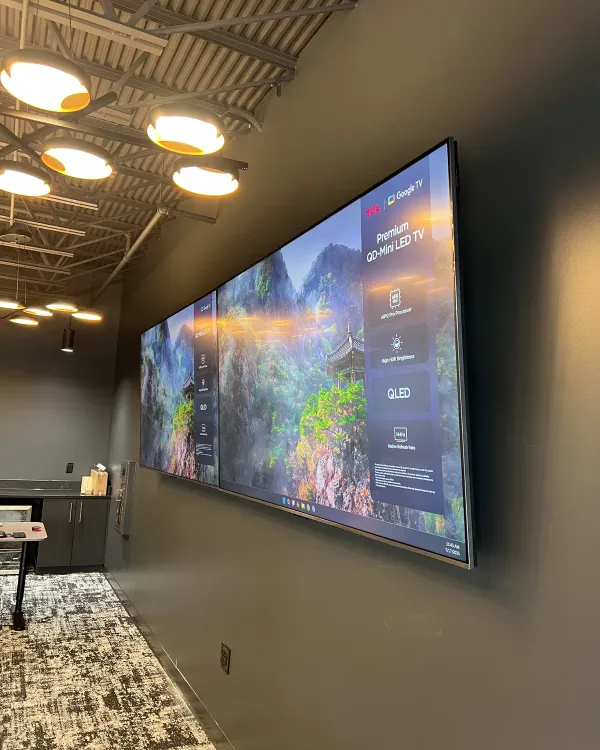
A large TV mounted high on a dark wall in a bar area under pendant lights

Apartment buildings on the Lower Avenues: one pilot hole, then a word with the owner

Apartments make up about 39 percent of the housing in the Avenues, nearly as much as single-family houses at 42 percent, and apartment buildings are scattered all through the lower blocks. They went up over many decades, so nobody can name your wall from the hallway. The installer tests first: a magnet, then one small pilot hole. Wood shavings get lag bolts. Bright steel means metal stud framing and toggles set through 1/2-inch holes, four for a fixed or tilting bracket and six for a full-motion arm. Red or gray dust means brick or concrete, a hammer drill and Tapcons, with the +$99 masonry surcharge. Plaster, drywall and metal stud add nothing. Who approves the job is a separate question, and only your building can answer it. Ask the owner or manager whether drilling is allowed, during which hours, and whether cable may go inside the wall. If you rent, get the yes in writing. A fixed bracket leaves four small holes to patch when you move out. Tell us the answers when you book.

Above 13th Avenue: valley views, drywall over stud and where the screen can go

The grid gives out around 13th Avenue. Above it the streets wind along the hillside, and the houses are newer and set to look out over the valley. The neighborhood's last real building uptick ran from the 1940s through the 1960s, and a mid-century or later house is far more likely to be drywall over wood stud than plaster. Brick or stucco outside says little about the wall inside, so a pilot hole still confirms it, in a finished basement as much as upstairs. Lag bolts go into the studs. Drywall alone is trusted only with a small set, up to about 32 inches and 30 pounds on rated toggles. Placement is the harder question in an Upper Avenues room. Where a room is built around the view, the best wall for windows is the worst wall for a TV, and a screen facing glass picks up glare all afternoon. The installer tapes the outline on a side wall and you approve the spot before drilling. A full-motion arm, $59 or $79 if you need one of ours, turns the screen away from the light.

Steep streets, stairs and winter: carrying a big panel into an Avenues house

The Avenues sits on the lower slopes of the Wasatch, and parts of it are steep. Houses in the historic blocks run mostly one and a half to two and a half stories, which can put the TV room up a flight of stairs. That changes the plan, not the price. Tell us the screen size and the floor when you book. The installer measures the box against the stair width and the turn at the landing before lifting, and a screen of 95 inches or more comes with two technicians as part of its $399 rate. On a sloped lot the panel stays boxed until it is indoors. Winter adds a step. A TV that rode in a cold truck is left to reach room temperature before it is powered, so any condensation clears. Boot covers go on at the door, a drop cloth goes down, and a vacuum runs at the drill, because plaster dust finds every room. In a bedroom the screen center goes 42 to 50 inches off the floor.

Cables, outlets and the Avenues historic district: what we do and who to ask

The city made the Avenues a local historic district in 1978, and the National Register listing followed in 1980. We mount TVs. We do not interpret district rules, and nothing here should be read as one. If you wonder whether a project at your house needs review, the city's historic preservation staff are the people to ask. What we can describe is the work itself. Cable concealment inside the wall is $99 per TV and covers low-voltage cable: HDMI, optical, speaker and network. In a stud wall behind plaster-and-lath the two openings are cut slowly with an oscillating tool so cracks do not run past the plate, and the cable drops through the bay. A solid brick wall has no bay to drop through. There a paintable raceway on the surface, $79, carries the cables down in one straight line. Power is separate. A new outlet behind the screen is an electrician's work, and we leave the house wiring alone. Where an outlet already sits behind the TV, the cord simply plugs in.

Your The Avenues price, before you book

Pick the TV's size, the wall and the mount, and the estimator shows the labor price, from $129 per TV. Then book a time online, or call from 8:00 AM to 8:00 PM.

Field notes from The Avenues installs

On the Avenues the avenue number is a rough guide to the wall. From South Temple up toward 11th Avenue the houses are mostly Victorian-era and early 1900s, and the wall to expect is plaster-and-lath. Behind it sits either a wood stud, found with a magnet and loaded with lag bolts, or the brick of an outside wall, which gets a test hole and Tapcons only where brick and mortar are sound.

Above 13th Avenue, where the grid gives way to winding streets, the houses are later and the walls are more often drywall over stud. Apartment buildings, about 39 percent of the housing here, are tested one at a time, and the owner or manager is asked before anyone drills.

This is seismic country along the Wasatch, and old brick may be unreinforced masonry, so no anchor goes into mortar that powders. And the Avenues is a local historic district. We do not speak for the city on what that covers, so those questions go to its historic preservation office.

TV mounting prices in The Avenues

There is one price list for the Avenues, set by screen size: $129 up to 54”, $159 for 55-69”, $209 for 70-79”, $299 for 80-94”, $399 for 95” and up. Hiding the cables inside the wall costs $99 per TV. A paintable surface raceway is $79. Masonry, meaning brick, stone or concrete, carries the published +$99 surcharge. Plaster, drywall and metal stud carry no surcharge. On the Avenues the line can fall inside a single house: lag bolts into studs behind plaster-and-lath are base rate, and Tapcons into a solid brick outside wall or a fireplace are masonry. The bracket is a separate line, $49 or $69 flat and $59 or $79 full-motion if you want one of ours. Soundbar install is $79. No travel fee anywhere in the Avenues.

How Express Mounting covers The Avenues

Alex Crabinsky founded Express Mounting in Atlanta in 2015, and 9,747+ documented installs since then shaped the checklist an Avenues job follows. The Avenues jobs run through vetted Salt Lake County installers who carry the same hardware, work off the same install checklist, and back every job with the same 3-year workmanship warranty, held by Express Mounting. The installer we dispatch expects plaster over lath or brick below 11th Avenue and drywall above 13th, and tests the wall either way.
TV mounting and installation in The Avenues, UT: common questions

Is TV mounting in the Avenues priced by the hour?

No. It is a flat rate by screen size: $129 up to 54 inches, $159 for 55-69, $209 for 70-79, $299 for 80-94 and $399 for 95 and up. In-wall cable concealment is $99 per TV. Anchoring into brick, stone or concrete adds the +$99 masonry surcharge, which in the Avenues usually means a solid brick outside wall or a fireplace. Plaster-and-lath, drywall and metal stud carry no surcharge. The bracket is separate, yours or one of ours.

Do you offer same-day TV mounting in the Avenues?

Yes, when you book before noon. Call (470) 777-4077 or book online, and an installer from our vetted Salt Lake County network arrives within 2-4 hours of confirming a same-day request, from the first blocks above South Temple to the winding streets past 13th Avenue.

Can a TV hang on century-old plaster in a Lower Avenues house?

Yes, as long as the plaster is not what holds it. The installer finds the wood studs behind the plaster-and-lath with a magnet and a pilot hole, then drives 5/16-inch lag bolts into them. If the wall proves to be brick behind the plaster, 1/4-inch Tapcons go into sound brick instead and the +$99 masonry surcharge applies. Plaster itself adds nothing.

Does the Avenues historic district have a say over a TV inside my house?

We cannot answer that for the city, and we do not guess at district rules. The Avenues has been a local historic district since 1978, and the city's historic preservation office can tell you what, if anything, applies to your project. In an apartment or condo, ask the owner or manager too.

Can you carry a 75-inch TV to the second floor of an Avenues house?

Yes. Tell us the screen size and which floor when you book. The installer measures the box against the stairs and the landing before lifting. A 75-inch install is $209, and a screen of 95 inches or more arrives with two technicians at its $399 rate.

Call (470) 777-4077 Text a photo

Text a photo of your wall

Point your phone's camera here to start a text to +14707774077. Add a photo of the wall and your TV's size, and we reply with your price and the first open time.

QR code that starts a text message to +14707774077
Use the quote form instead