Skip to content
Same-Day Service · Free Estimates Text a photo

TV mounting services in Downtown San Diego, CA

Downtown San Diego TV mounting is flat-rate: $129 up to 54", $159 for 55-69", $209 for 70-79", $299 for 80-94", $399 for 95-inch and up (2 technicians). Cable concealment is $99 per TV, brick or stone adds $99. Same-day slots when booked before noon, and the installer usually arrives within 2-4 hours of your confirmation.

“Very happy with the work. Polite, cleaned up after, and paid close attention to detail to make sure it was the ideal spot.”
John Leahy, Google review of an Atlanta install

Updated

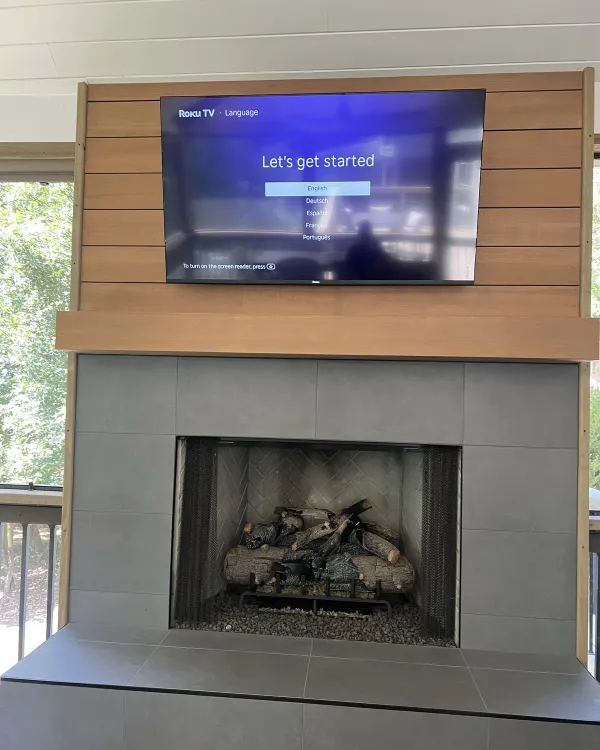
A Roku TV on a horizontal wood-plank chimney breast above a gray tile fireplace on a covered porch

Documented install, September 2025 By the Atlanta crew.

TV Mounting Cost Estimate

Step 1 of 520%
How big is the TV?
One TV.

Rather we call you?

Leave your number, and we call you about your TV, any day from 8:00 AM to 8:00 PM. Add a note on the wall or the TV if you like.

Contact Information

Helps us match you with the installer closest to you.

Downtown San Diego began as Horton's Addition: Alonzo Horton bought 800 acres of bayfront land in 1867. Today its neighborhoods are the Gaslamp Quarter, East Village, Little Italy, the Marina, Columbia, Cortez Hill and the Core, and much of the housing is condo towers, mid-rises and lofts built since the 1980s. A tower wall is tested first, because the pilot hole can show concrete, metal stud or wood. A Victorian-era Gaslamp building can show brick or lath-and-plaster. Your Express Mounting installer brings a hammer drill, 3/16-inch carbide bits, 1/4-inch Tapcons for masonry, toggles for steel framing and 5/16-inch lag bolts for wood stud. This is earthquake country, so every anchor goes into structure. Same-day Downtown San Diego service when booked before noon.

What Express Mounting Customers Say

Google reviews of our Atlanta installs

These guys did an outstanding job installing 2 TVs for us. Highly recommend them for your TV mounting needs.

Angelina Pascar

Google review

AP
We called and requested a same day service and they were able to accommodate, even on a Friday. When our technician got here, he assessed our mounting ask in seconds and immediately got to work.

Kelly Bell

Google review

KB
Great service, thank you Alex

Aleksey Khusanov

Google review

AK

Look us up before you book

Express Mounting has one Google Business Profile, at our Alpharetta, GA headquarters. Customer reviews for every metro we serve live there.

San Diego installs are done by local installers we dispatch, on the same flat rates and the same warranty.

28 Google reviews, every one on that profile, from customers of the Atlanta crew.

Every booking comes with

  • 3-year workmanship warranty
  • Same-day installation when you book before noon
  • An installer typically arrives within 2-4 hours of confirmation

From Horton's Addition to a condo skyline: reading a downtown wall before drilling

Downtown San Diego grew out of one land purchase. In 1867 Alonzo Horton bought 800 acres of pueblo land on the bay, and in 1869 he added the 160 acres of an earlier townsite. The Victorian-era commercial blocks of that first city survive in the Gaslamp Quarter. El Cortez went up on Cortez Hill in 1927. Then, after redevelopment plans were drawn in 1975, the housing arrived: the Meridian in 1985, Harbor Club in 1992, and from the late 1990s on a surge of high-rise building. More than half of the city's towers over 300 feet were finished after 2000, and none tops 500 feet, because of an FAA limit tied to the nearby airport. For an installer, those generations mean a downtown address says little about its wall. One room can have two kinds: concrete on one side, drywall over metal stud on the other. So nothing is assumed from a building's age or its lobby. The visit starts with a magnet, a knock and one small pilot hole behind the TV spot, and the dust on the bit names the wall.

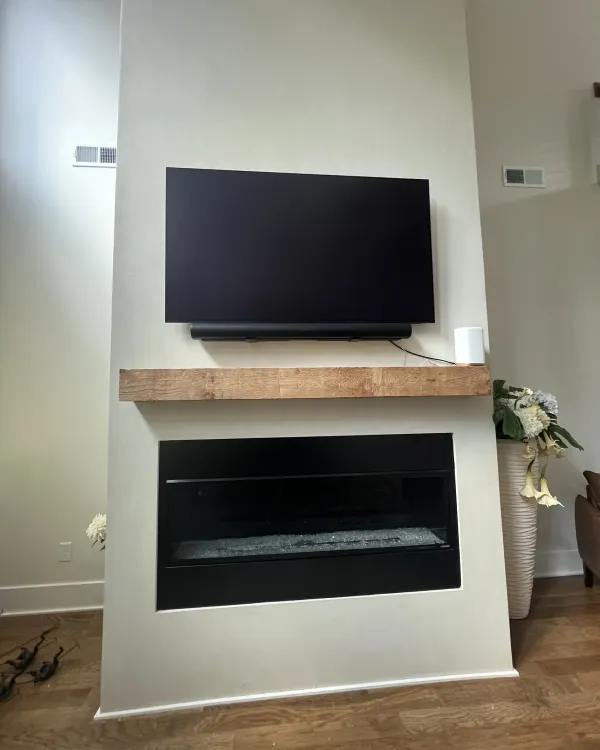
A TV and soundbar above a rustic wood mantel on a smooth white fireplace with a linear firebox

Condo towers in the Marina and Columbia: toggles for metal stud, Tapcons for concrete

The Marina district was warehouses and vacant lots before it was rebuilt with mid-rise and high-rise apartments and condominiums, and Columbia sits just north of it, between the Marina and Little Italy. Downtown towers are where a San Diego installer tests for concrete and metal stud as a matter of course. The pilot hole tells them apart. Bright metal curls on the bit mean a steel stud behind the drywall. Thin steel will not hold the thread of a lag bolt, so the installer drills a 1/2-inch hole at each bracket point and sets toggles, whose metal channel flips flat behind the stud and spreads the pull. Four toggles hold a fixed or tilt bracket. A full-motion arm gets six, over two studs. Gray dust means concrete. That calls for a hammer drill, a 3/16-inch carbide bit and 1/4-inch Tapcons threaded at least an inch into the concrete. If drywall is furred out in front of it, the first hole measures the gap and the Tapcon is sized to cross it. Concrete is masonry and adds +$99. Metal stud adds nothing.

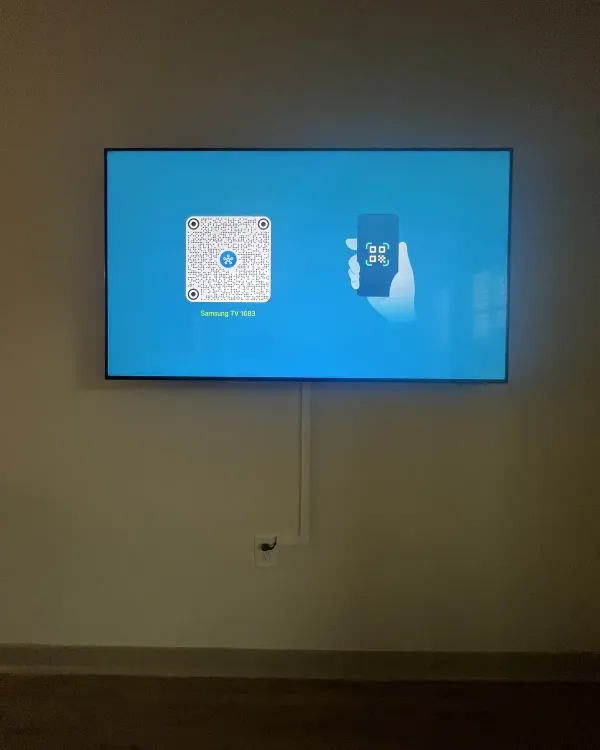
A TV on a tan wall with a paintable cable raceway running down to the outlet

Gaslamp Quarter upper floors: brick, plaster and renovated partitions between 4th and 6th

The Gaslamp Quarter runs from Broadway to Harbor Drive between 4th and 6th avenues: 38 acres and more than 90 historic buildings, most of them from the Victorian era, on the National Register since 1980. Restoration began in the mid-1970s, and a restored building rarely has only its original walls. So a home or an office above the street here can have three kinds of wall in one unit. An outside wall may be brick, bare or under plaster. An original inside wall may be lath-and-plaster over wood stud. A partition added in a renovation is usually drywall, over wood or steel. The installer tests each wall you are considering before anything is drilled. Brick takes 1/4-inch Tapcons in the brick face or the mortar joint, whichever lines up with the mount holes, and old mortar is scraped with an awl first. If it crumbles, the bracket shifts until every anchor has sound material around it. Brick is masonry at +$99. Plaster and drywall add nothing. Bare brick has no cavity, so cables ride a paintable raceway.

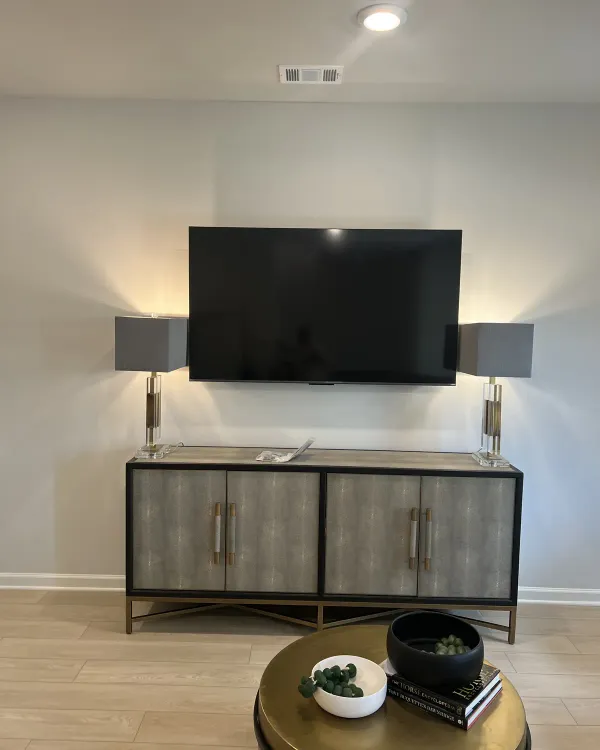
A TV on a flat mount on a white wall above a gray console and a round gold table

East Village lofts and mid-rises: the housing that followed Petco Park

East Village is the largest downtown neighborhood, about 130 blocks running east from Seventh Avenue to 18th Street. For most of its life it was warehouses and vacant lots. Petco Park opened in 2004, residential building took off right after, the Central Library followed in 2013, and today most East Village residents live in mid-rises, condominiums and lofts. A loft wall is the least predictable wall downtown. It may be drywall over metal stud, drywall over wood stud, or concrete or brick left showing on purpose. The installer does not go by the look of the lobby. One pilot hole decides: wood shavings mean 5/16-inch lag bolts, bright steel means toggles, gray or red dust means a hammer drill and Tapcons at the +$99 masonry rate. Lofts also tend toward tall walls and open plans, and that changes placement. Screen height follows the seat, not the ceiling. A full-motion arm lets one screen serve the sofa and the kitchen. An exposed concrete or brick wall has no cavity, so the cables go in a surface raceway painted to match.

Cortez Hill and Little Italy: a 1927 landmark, old bungalows and new mid-rises

El Cortez, a Spanish Colonial Revival tower, opened on Cortez Hill on November 26, 1927. At 14 stories it was the tallest building in San Diego until 1963, and since 2004 it has been 85 condominiums. Cortez Hill is the high ground of downtown, with views over the bay, and a unit with a view usually gives its best wall to glass. Little Italy, to the west, has a different mix. It began as an Italian and Portuguese fishing neighborhood tied to the tuna fleet, and it still has single-family bungalow-style historic houses beside high-density mixed-use buildings. Each type gets its own test. A 1920s building that has been renovated may keep lath-and-plaster in one room and have new drywall in the next, and we never assume what its structure is. An old Little Italy house is handled like any pre-war house: a magnet for the lath nails, a pilot hole, lag bolts into wood stud. A newer mid-rise is tested for wood, steel or concrete. Where windows take the main wall, a full-motion arm on a side wall turns the screen away from afternoon glare.

Before you book a downtown condo install: four questions for building management

Downtown towers and mid-rises are run by associations and management offices, and each sets its own terms for outside contractors. We do not know your building's terms, so ask before choosing a time. Four questions cover nearly everything. Does an installer need to be registered at the front desk or with the office ahead of the visit? What hours is drilling allowed? Is there a service elevator for a large TV box, and does it have to be reserved? May cable run inside the wall, or must it stay on the surface? Pass the answers along when you book and the appointment is built around them. None of it changes the flat rate. Only the arrival window moves. If the building says no to opening the wall, a paintable raceway at $79 keeps the wires in one neat line. Renters need the owner's yes as well as the building's, in writing, since a mount leaves four to six holes. A TV of 95 inches or more comes with two technicians as part of its price, so mention the size and the elevator together.

Earthquake country and bay light: how a Downtown San Diego visit runs

The Rose Canyon Fault comes ashore near downtown San Diego, and a TV in seismic country is hung with that in mind. The weight goes into structure: concrete, wood stud, or steel stud through toggles sized for it. Drywall alone carries only a small set, up to about 32 inches and 30 pounds. A full-motion arm is pulled to full reach before the screen goes on. Light is the other downtown condition. A unit that faces the bay gets low sun across the water late in the day, so the installer tapes the screen outline on the wall and has you look at it from your seat before drilling. Then the bracket goes up, matched to the TV's VESA pattern and weight and leveled with a laser. In-wall concealment in a stud partition is $99 per TV. Setup follows: WiFi, inputs, picture mode, a soundbar over HDMI eARC. Samsung including the Frame, Sony, LG OLED, TCL and Hisense are routine. A vacuum runs at the bit the whole time, because concrete dust in a condo has nowhere to go.

Your Downtown San Diego price, before you book

Pick the TV's size, the wall and the mount, and the estimator shows the labor price, from $129 per TV. Then book a time online, or call from 8:00 AM to 8:00 PM.

Field notes from Downtown San Diego installs

Downtown San Diego is the one part of the metro where the installer does not expect a wood-framed house. Housing here is towers, mid-rises and lofts in the Marina, Columbia, East Village and Little Italy, much of it built since the 1980s, plus older buildings in the Gaslamp Quarter and on Cortez Hill. Every one of them is tested first. The pilot hole shows concrete, metal stud or wood, and the hardware follows: Tapcons with a hammer drill, toggles, or lag bolts.

The Gaslamp Quarter’s Victorian-era buildings add brick and lath-and-plaster to the list, often next to drywall from a renovation. Little Italy still has old bungalow-style houses, tested like any pre-war house.

Two conditions apply on every block. Buildings set their own contractor terms, so a call to management comes before the booking. And the Rose Canyon Fault comes ashore near downtown, so the load goes into structure and never into drywall alone.

TV mounting prices in Downtown San Diego

Screen size sets the price in Downtown San Diego, and the floor you live on does not: $129 up to 54”, $159 for 55-69”, $209 for 70-79”, $299 for 80-94”, $399 for 95” and up. Cables hidden inside the wall are $99 per TV. The surface option, a paintable raceway, is $79. Concrete, brick and stone are masonry and add the published +$99 surcharge. Metal stud, drywall and plaster carry none. Downtown, that puts the surcharge on a concrete tower wall and Gaslamp brick, and leaves a metal stud partition in the same unit at the base rate. The bracket is a separate line from labor: bring yours, or ours is $49 or $69 flat and $59 or $79 full-motion. Soundbar install $79. No travel fee anywhere downtown.

How Express Mounting covers Downtown San Diego

Since Alex Crabinsky opened Express Mounting in Atlanta in 2015, the company has documented 9,747+ installs, and the downtown tower routine comes out of that record. Downtown San Diego jobs run through vetted San Diego County installers who carry the same hardware, work off the same install checklist, and back every job with the same 3-year workmanship warranty, held by Express Mounting. The installer we dispatch already knows that a Marina tower wall has to be tested for concrete and metal stud, and that a Gaslamp wall may be brick under its plaster.
TV mounting and installation in Downtown San Diego, CA: common questions

How much does TV mounting cost in Downtown San Diego?

$129 up to 54 inches, $159 for 55-69, $209 for 70-79, $299 for 80-94 and $399 for 95 and up, flat by screen size. Cable concealment in the wall is $99 per TV. A concrete tower wall or Gaslamp brick adds the +$99 masonry surcharge. A metal stud partition, drywall and plaster carry no surcharge. The bracket is extra, your own or one of ours.

Is a same-day TV install possible in a Downtown San Diego condo?

Yes, when you book before noon, online or at (470) 777-4077. An installer from our vetted San Diego County network arrives within 2-4 hours of confirming a same-day request, from Little Italy to East Village.

Can a TV be mounted on a concrete wall in a downtown tower?

Yes. The installer uses a hammer drill, a 3/16-inch carbide bit and 1/4-inch Tapcons, and sizes them to cross any drywall furred in front of the concrete. Concrete is masonry, so the +$99 surcharge applies. It has no cavity for cables, so they run in a paintable raceway unless a stud partition is close by.

Does my downtown HOA or building manager have to approve a TV mount?

Only your association or management office can answer that, and buildings differ. Ask about contractor registration, drilling hours, the service elevator and whether cable may go inside the wall. Tell us what you learn and the visit is scheduled around it. A balcony TV is a separate question for the building, and near the bay it goes up on 316 stainless hardware because of the salt air.

Who actually comes to a Downtown San Diego address, and who is accountable for the work?

Express Mounting dispatches an installer from our vetted San Diego County network, who works from the hardware list and install checklist we use in Atlanta. Your price is the flat rate quoted at booking. The 3-year workmanship warranty is held by Express Mounting, so a claim comes to us and not to the individual installer.

Call (470) 777-4077 Text a photo

Text a photo of your wall

Point your phone's camera here to start a text to +14707774077. Add a photo of the wall and your TV's size, and we reply with your price and the first open time.

QR code that starts a text message to +14707774077
Use the quote form instead