Plaster and lath adds about an inch of wall before the stud, so buy for reach: a fixed or tilting plate that spans your studs, 3/8-inch lags 4 inches long (3 at the least), a magnetic finder for the lath nails and a masonry bit for the plaster. Toggles in plaster alone are not a TV mount.
Quick note: This page contains Amazon affiliate links. We may earn a small commission at no extra cost to you if you buy through them.
A plaster wall holds a TV as well as any other, once the bolts reach the wood. The trouble is everything in the way. The plaster is thicker than drywall and harder to drill, the lath hides the studs from most electronic finders, the studs in an older house rarely sit at a tidy 16 inches, and a careless bit can crack a patch of plaster that’s been fine for a hundred years.
That changes the shopping list more than people expect. This page covers what to buy; finding the studs has its own guide, how to find studs behind plaster and lath walls, with six methods. How we picked: every product spec is quoted from its Amazon listing, and the install rules match our other wall-type guides. These are on-paper matches, not lab tests.
What makes plaster walls different for a TV mount?
Four things, and each one points at a different purchase:
| Plaster problem | What it means | What to buy |
|---|---|---|
| About 1 inch of plaster and lath before the stud (drywall is 1/2 inch) | Standard lags lose bite | Longer lag bolts |
| Wood lath everywhere, sometimes metal lath | Density-reading stud finders beep all over | A magnetic finder, or a scanner that flags metal |
| Stud spacing that wanders from 14 to 24 inches | A narrow plate may catch only one stud | A plate that lists a range of spacings, or an extension plate |
| Hard, brittle plaster | Cracks and dust if you drill it like drywall | A masonry bit, painter’s tape and dust collection |
How long should lag bolts be for plaster walls?
At least 3 inches, and 4 inches is the better buy for a TV. The rule in our plaster stud guide is that a lag must bite at least 1.5 inches into the stud after passing the plaster and lath. Here is how much thread reaches the wood, ignoring the bracket’s own thickness:
| Wall | Wall before the stud | 3-inch lag, depth in the stud | 4-inch lag, depth in the stud |
|---|---|---|---|
| 1/2-inch drywall | 1/2 in | about 2.5 in | not needed |
| Plaster and lath | about 1 in | about 2 in | about 3 in |
| Thick plaster and lath | about 1.25 in | about 1.75 in | about 2.75 in |
A 4-inch lag through plaster gets slightly more wood than a 3-inch lag gets through drywall, so it restores the usual bite. These 3/8 x 4 inch lag bolts come as eight sets with washers. For a smaller TV on thinner plaster, 3/8 x 3 inch lags such as the Prime-Line 50-pack still clear the 1.5-inch minimum. Either way, two lags per stud at the minimum, driven into the stud’s center through a 1/4-inch pilot hole.
Best TV mounts for plaster walls
The bracket matters less than on steel studs, but one feature earns its keep on old walls: a wall plate that lists more than one stud spacing, so it can still reach a second stud when the framing isn’t at 16 inches.
| Bracket | Type | Listed TV sizes | Listed rating | Listed max VESA | Listed stud spacing |
|---|---|---|---|---|---|
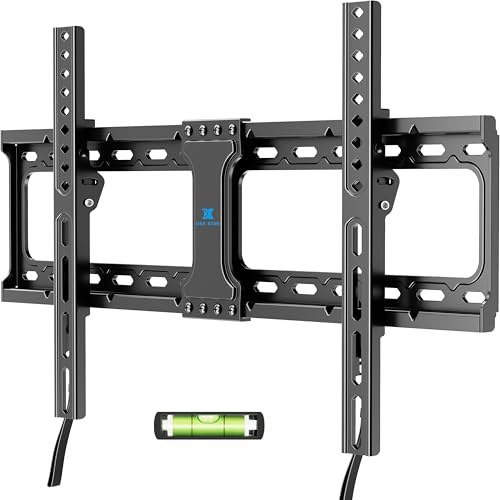
| USX STAR UL-listed fixed mount | Fixed, low profile | 37-86” | 132 lb | 600×400 | 16, 18, 24” |
| USX MOUNT tilting mount | Tilt | 37-95” | 132 lb | 600×400 | 16, 24” |
| USX Mount UL-listed full-motion mount | Full-motion | 42-85” | 110 lb | 600×400 | 16, 18, 24” |
| VIVO extension adapter plate | Adds width to any mount | n/a | 154 lb | n/a | 16 to 24” (off-center studs) |
The default: the USX STAR fixed plate lists 16, 18 and 24-inch spacing, so it has room to reach a second stud on irregular framing, plus 600×400 and 132 lb.
When the studs won’t cooperate: the VIVO extension plate lists “off-center studs” and 16 to 24-inch spacing at 154 lb. It bridges two studs and lets the TV sit centered on the wall rather than centered on the framing. A painted 3/4-inch plywood backer lagged across three studs does the same job for a big TV.
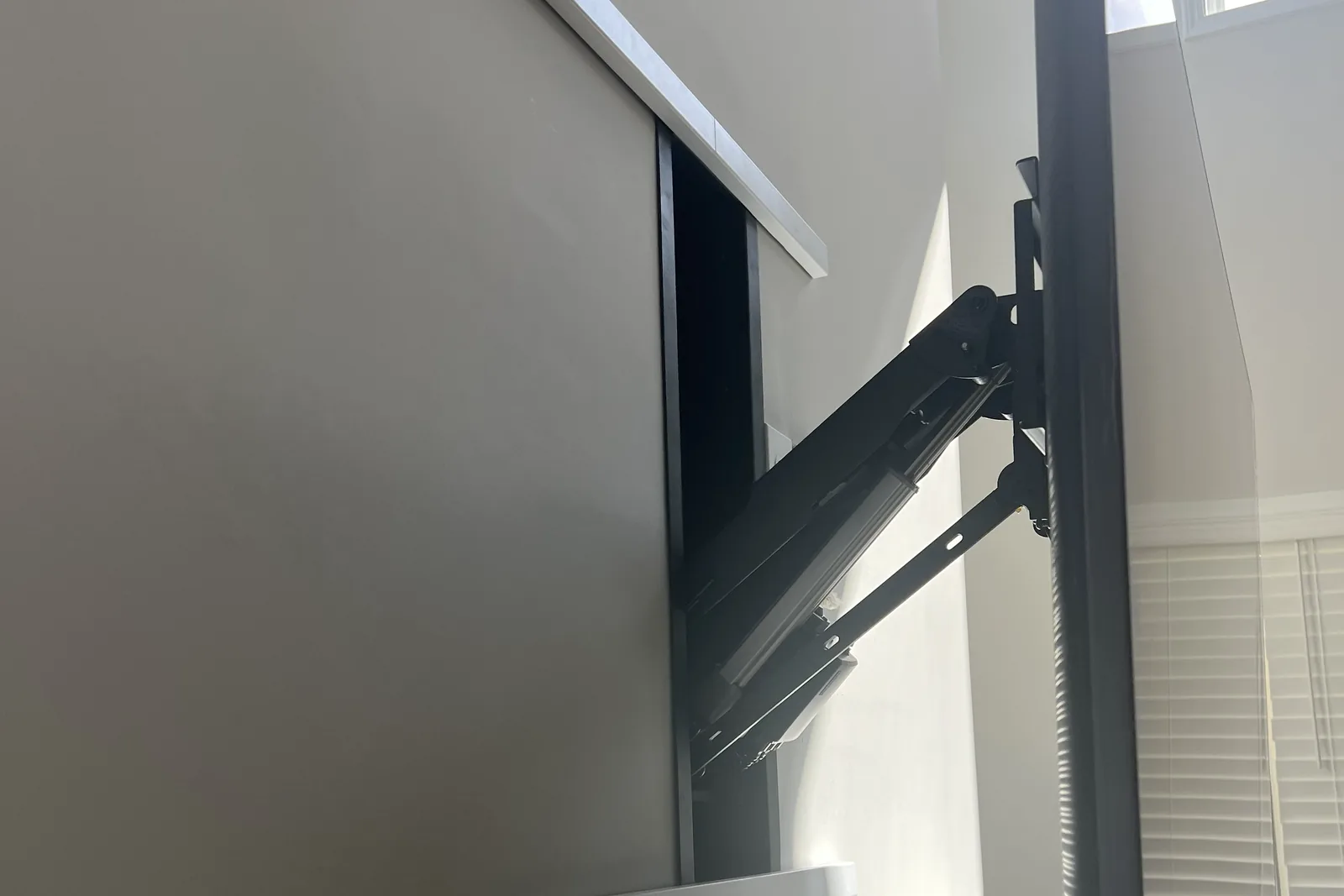
Full-motion on plaster: fine if every lag is in wood. The USX Mount arm lists 110 lb and the three common spacings. An arm pulls hardest on the top lags, so use the 4-inch lags here.
Size any of them the usual way: the rating should clear your TV’s weight without its stand by at least 25%, the rule from our VESA size guide.
Which stud finder works on plaster?
A magnet first. Lath is nailed to every stud in horizontal rows, so the nails line up vertically over each stud, and a magnet finds nails no matter how dense the plaster is. The CH Hanson magnetic stud finder uses rare-earth magnets and needs no batteries. To narrow the search on a big wall, a 13-sensor pad like the Franklin ProSensor 710 reads a wider area at once, and the Bosch GMS120-27 wall scanner also flags metal and live wires, which matters if the wall turns out to have metal lath. Confirm each stud with a thin nail before the lags go in; the six methods are in our plaster stud guide.
What drill bits and supplies do you need for plaster?
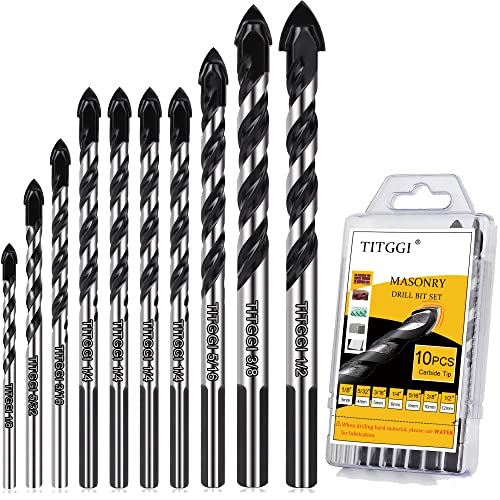
- A masonry bit for the plaster. Plaster dulls wood bits fast. A masonry set such as this 10-piece masonry bit set (1/8 to 1/2 inch) gets you through the plaster, then switch to a sharp wood bit for the lath and the 1/4-inch pilot into the stud.
- Painter’s tape. A square over each mark before you drill keeps the edge of the hole from chipping.
- Slow speed, no hammer. Let the bit cut. Hammer mode shakes plaster loose from the lath around the hole.
- Dust collection. Old plaster makes fine dust that settles everywhere. A Shop-Vac drilling attachment catches it at the bit; the cheaper EZ SPARES dust collector fits 32 to 38 mm vacuum hoses, per its listing.
Can you mount a TV on plaster without hitting a stud?
No. Toggle bolts in plaster alone are not a TV mount: the load has to reach the wood framing behind the plaster, which is the rule in our toggle bolts vs lag bolts guide. If the studs don’t line up with where the TV has to go, span them with an extension plate or a plywood backer instead of reaching for anchors. Renting and can’t drill at all? A floor stand holds the TV in front of the wall; see our TV floor stands for renters.
Frequently asked questions
What is the best TV mount for plaster walls?
A fixed or tilting mount whose wall plate lists several stud spacings, lagged into the studs with 3/8-inch lags long enough to pass the plaster. On paper, the USX STAR fixed plate (16, 18 or 24-inch studs, 600×400, 132 lb) with 3/8 x 4 inch lags covers TVs up to about 105 lb.
How long should screws be to mount a TV on plaster?
Use 3/8-inch lag bolts at least 3 inches long, and 4 inches on thick plaster or with a heavy TV. Plaster and lath adds about an inch before the stud, and the lag needs at least 1.5 inches of bite in the wood.
Can you use toggle bolts in plaster walls for a TV?
Not as the only support. Toggles in plaster alone are not a TV mount. Lag the bracket into the studs, and if the studs are in the wrong place, bridge them with an extension plate or a plywood backer.
Will drilling into plaster crack it?
It can if you rush. Tape the spot, use a sharp masonry bit at slow speed with the hammer setting off, and let the bit cut. The lath behind the plaster is soft wood, so switch to a wood bit once you’re through.
Do stud finders work on plaster walls?
Density-reading finders struggle because the lath runs everywhere. A magnetic finder works better: it finds the lath nails, which line up over each stud. Confirm with a thin nail before drilling.
Does plaster cost extra to mount on?
Not with us. Plaster and lath is priced like drywall; the $99 surcharge applies only to brick, stone and concrete.
Want it installed?
Our labor is a flat rate by TV size: $129 up to 54”, $159 for 55-69”, $209 for 70-79”, $299 for 80-99”, and $399 for 100” and up, with the lags and anchors for your wall part of the job. The bracket is yours, or one of ours for $49-$79. Same-day slots open up in all 13 metros we serve when you book before noon, and every install carries our 3-year workmanship warranty. Details are on the price list; for a quote, send us your TV size and wall type.