Heat sweeps on a Conroe fireplace wall
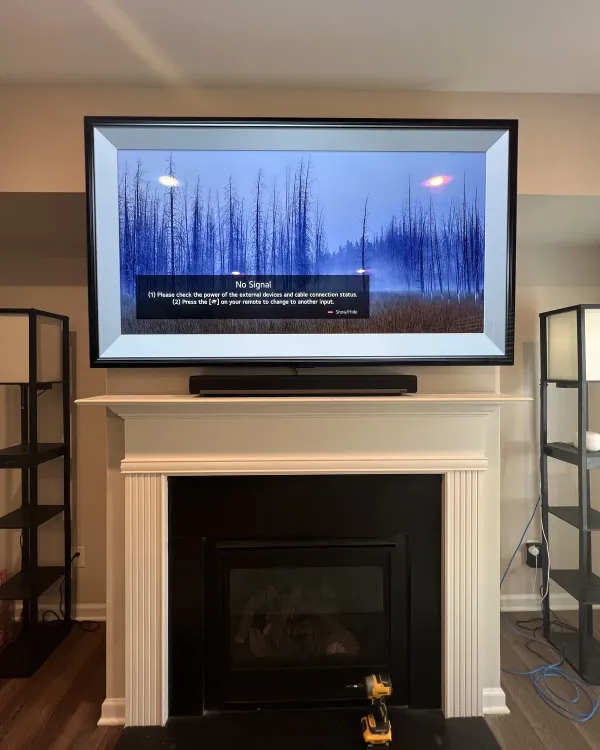
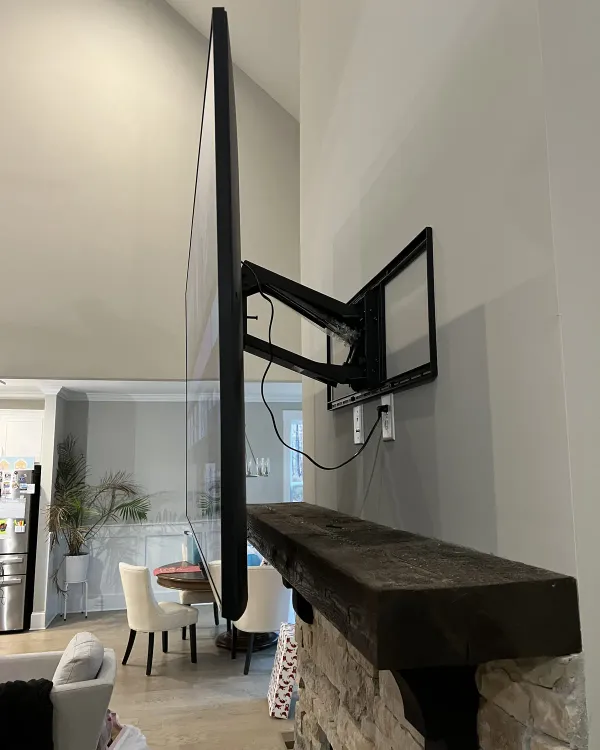
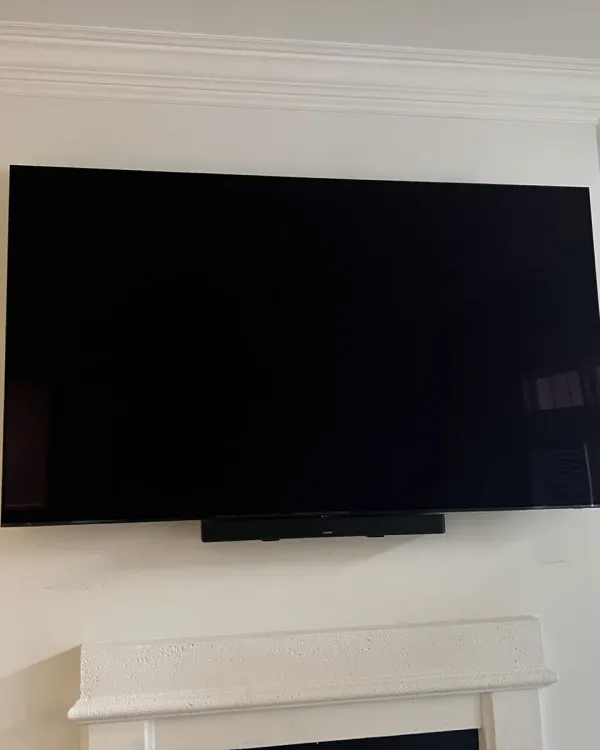
Fireplaces in Conroe split by era. The historic downtown houses often have a brick chimney breast running floor to ceiling with plaster on either side. The 1970s lake houses lean toward a raised brick hearth and a heavy timber mantel. Grand Central Park and Graystone Hills mostly use a gas insert with cast stone or brick to the mantel and drywall above. Whatever the vintage, heat gets measured before hardware gets chosen. Thirty minutes of full burn, then an infrared read across the wall above the mantel. Gas units with a real mantel shelf usually settle between 95 and 110 degrees, which a modern panel handles. Readings past 120 degrees push the conversation toward a mantel deflector or a pull-down bracket that lowers the screen for viewing. On drywall or plaster above the surround the price stays standard. A bracket landing on the brick face gets quarter-inch Tapcons at low speed and the published +$99 masonry surcharge. A drop cloth goes over the mantel and hearth before the first hole. Allow 85 to 115 minutes.