Skip to content
Same-Day Service · Free Estimates Book Online

Surge Protection & Power Management - Protect Your Equipment

That beautiful mounted TV and all your connected equipment are vulnerable to power surges - a single lightning strike or power fluctuation can destroy thousands of dollars in electronics instantly. We've seen it happen to clients who skipped proper surge protection. Quality surge protectors and UPS (uninterruptible power supply) systems protect your investment and provide clean power for optimal performance. This isn't just about power strips with extra outlets - proper protection involves joule ratings, clamping voltage, and response time specifications that actually matter. For any professional TV installation, surge protection should be part of the conversation.

Surge Protection & Power Management - Protect Your Equipment

Home Theater Surge Protectors

Quality surge protectors designed for home theater use offer more than basic power strips. They feature higher joule ratings (energy absorption capacity), coaxial and Ethernet protection, spaced outlets for power adapters, and sometimes power conditioning to filter electrical noise. Look for joule ratings of 2000+ for serious protection. The "clamping voltage" - the voltage level at which the surge protector activates - should be 400V or lower. Better surge protectors sacrifice themselves to protect your equipment, which is why some include connected equipment warranties.

Picture Product Shop
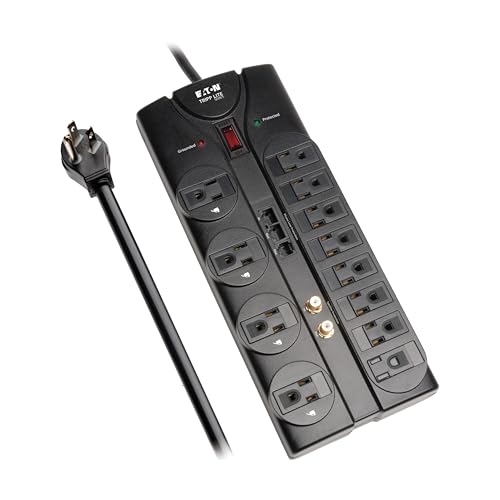
Tripp Lite AV Surge Tripp Lite Home Theater Surge Buy on Amazon
Belkin Surge Protector Belkin 12-Outlet Surge Buy on Amazon
APC SurgeArrest APC SurgeArrest Performance Buy on Amazon
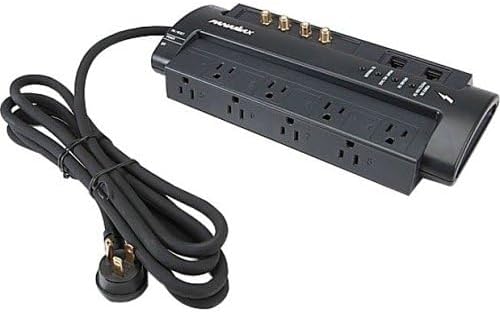
Panamax Power Management Panamax M8-AV-Pro Buy on Amazon

💡 Key Specifications: 2000+ joules minimum for AV equipment • 400V or lower clamping voltage • Look for indicator lights showing protection status • Replace after major surge events

Browse All: Home Theater Surge Protectors on Amazon

UPS Battery Backup Systems

UPS (Uninterruptible Power Supply) systems provide battery backup during power outages plus surge protection. For TVs and entertainment systems, the main benefits are: preventing data loss/corruption on smart devices, allowing graceful shutdown during outages, protecting against brownouts that can damage electronics, and providing cleaner power through voltage regulation. You don't need massive runtime - even 5-10 minutes allows you to properly shut down equipment. UPS systems are especially valuable for gaming consoles, DVRs, and streaming devices with storage.

Picture Product Shop
APC UPS 850VA APC Back-UPS 850VA Buy on Amazon
CyberPower 1500VA CyberPower CP1500PFCLCD Buy on Amazon
APC Smart-UPS 1500 APC Smart-UPS 1500 Buy on Amazon

💡 UPS Sizing: Add up watts of connected equipment • Choose UPS with capacity 20-30% above total • Pure sine wave recommended for sensitive electronics • Batteries typically last 3-5 years

Browse All: UPS Battery Backups on Amazon

Wall-Mounted & Behind-TV Solutions

For wall-mounted TVs, bulky power strips create cable management challenges. Wall-mounted surge protectors and low-profile solutions keep things tidy behind the TV or at outlet level. Some integrate directly into wall outlets, others are slim enough to hide behind mounted TVs. These are perfect for clean installations where traditional power strips would be visible or create clutter.

Picture Product Shop
Wall Mount Surge Protector Wall-Mount 6-Outlet Surge Buy on Amazon
Flat Plug Power Strip Flat Plug Surge Protector Buy on Amazon
In-Wall Surge Outlet In-Wall Surge Protected Outlet Buy on Amazon

Browse All: Wall Mount Surge Protectors on Amazon

Understanding Surge Protector Specifications

Not all surge protectors are equal - understanding key specifications helps you choose appropriate protection for your equipment value.

Key Specifications Explained:

Specification What It Means What to Look For
Joule Rating Energy absorption capacity 2000+ joules for AV equipment
Clamping Voltage Voltage level that triggers protection 400V or lower (lower is better)
Response Time How fast protection activates 1 nanosecond or less
UL 1449 Rating Safety certification standard Required - don't buy without it

Protection Status Indicators:

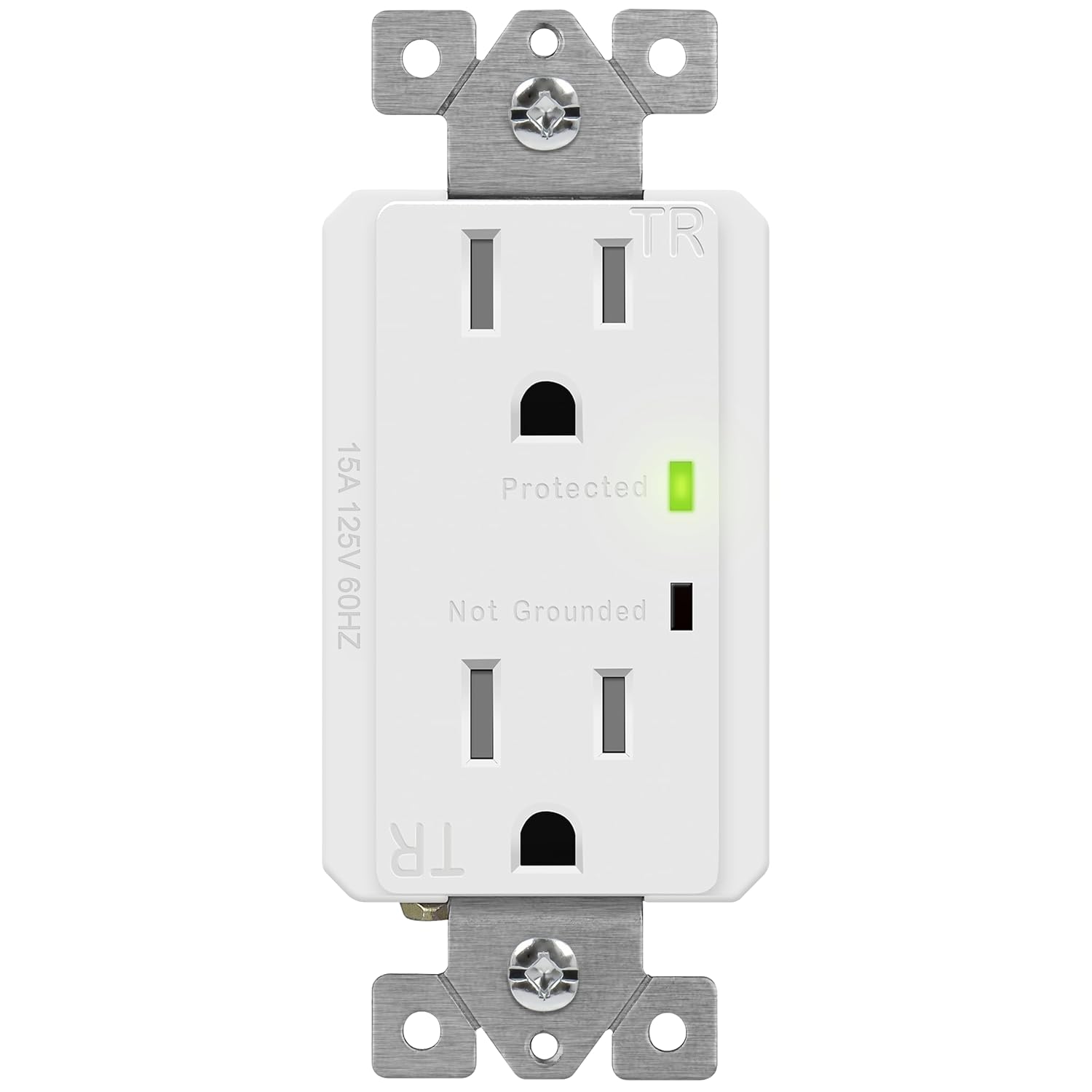
  • "Protected" LED - Confirms surge protection is active
  • "Grounded" LED - Confirms proper outlet grounding
  • "Wiring Fault" LED - Alerts to electrical problems

⚠️ Important: Surge protectors degrade over time and after surge events. If the "Protected" indicator goes off, the device is just a power strip - replace immediately. Many manufacturers recommend replacement every 3-5 years regardless of indicator status.

Frequently Asked Questions - Surge Protection

Do I really need a surge protector for my TV?

Yes - modern TVs contain sensitive electronics that can be damaged by power surges. Power surges happen more often than people realize - not just from lightning, but from utility switching, nearby heavy equipment, and even your own HVAC system cycling on and off. A single surge can damage your TV's power supply, main board, or smart features. Given that surge protectors cost $20-50 while TVs cost hundreds to thousands, it's cheap insurance. Connect your TV, streaming devices, soundbar, and any other AV equipment to a quality surge protector. Make sure it has adequate joule rating (2000+) and indicator lights showing protection status.

What's the difference between a power strip and a surge protector?

A power strip is just an extension of your wall outlet - it provides more outlets but zero protection against power surges. A surge protector includes MOVs (metal oxide varistors) that absorb excess voltage and protect connected equipment. You can tell the difference by looking for: a joule rating (power strips don't have one), UL 1449 listing, and protection indicator lights. Surge protectors cost more but actually protect your equipment. Never use a basic power strip for expensive electronics - it offers no protection whatsoever. When in doubt, check the packaging for surge protection specifications.

How many joules do I need?

For home theater and entertainment systems, we recommend 2000 joules minimum, with 3000+ being better. Joule rating indicates how much surge energy the protector can absorb before failing. Higher ratings mean more protection capacity and longer lifespan. Basic computer surge protectors are often 1000 joules or less - adequate for desk accessories but insufficient for expensive AV equipment. For a living room setup with a premium TV, soundbar, game console, and streaming devices, choose 2500-4000+ joules. The cost difference between 1000 and 3000 joule protectors is often just $10-20, making higher protection an easy choice.

Should I get a UPS for my TV?

A UPS is beneficial but not essential for most TV setups. The main benefits are: protection against brownouts (low voltage events that can damage electronics), cleaner power through voltage regulation, and graceful shutdown during outages. UPS is most valuable if you have: frequent power fluctuations or outages, a DVR or gaming console with storage that could be corrupted, or sensitive equipment like receivers and amplifiers. For a simple TV and streaming stick setup, a quality surge protector is usually sufficient. For a full home theater with multiple components, a UPS adds meaningful protection and can prevent the annoyance of reconfiguring devices after power loss.

Do surge protectors wear out?

Yes - surge protectors have a finite lifespan. The MOVs (metal oxide varistors) that absorb surges degrade each time they activate. After absorbing enough surge energy (up to their joule rating), the protection components fail and the device becomes just a power strip. Quality surge protectors include indicator lights that show when protection is active - if the 'Protected' light goes off, replace immediately. Even without visible failures, manufacturers typically recommend replacement every 3-5 years. After a major surge event (nearby lightning strike, significant power fluctuation), consider replacing even if the indicator shows protected - the protection capacity may be significantly reduced.

Can a surge protector save my TV from a lightning strike?

It depends on whether the strike is direct or nearby. A point-of-use surge protector cannot protect against a direct lightning strike to your home or service line - the energy involved (up to a billion joules) overwhelms any consumer device. What a quality surge protector reliably handles is the much more common nearby strike or induced surge: lightning that hits within a quarter-mile, sends a voltage spike down the grid, and would otherwise fry your TV's power board. We've replaced dozens of TVs in Vinings, Roswell, and Sandy Springs after summer storms where the homeowner had a $20 surge strip - in nearly every case a 2,500+ joule unit with a connected-equipment warranty would have absorbed the hit. The industry-standard layered defense is whole-home surge protection at the panel (handles big incoming surges) plus point-of-use surge protectors at each AV stack (handles residual energy and local switching transients). Neither alone is sufficient for serious lightning country - and Metro Atlanta averages 50+ thunderstorm days per year.

Will my insurance cover TV damage from power surges?

Sometimes, but coverage is inconsistent and almost always partial. Most standard homeowners and renters policies do cover sudden electrical damage from power surges as a named peril - but with three big asterisks: (1) the deductible (often $500-$1,000) wipes out claims under that amount, (2) the depreciation calculation on a 3-year-old TV typically pays out 30-50 cents on the dollar of replacement cost, and (3) damage from gradual wear, brownouts, or owner negligence (no surge protector, exposed outdoor outlet) is commonly excluded. Some carriers also exclude damage from strikes outside the home unless you have a specific lightning rider. The practical takeaway from claims I've seen customers file: it's faster, cheaper, and less paperwork to spend $40-$80 on a 2,500+ joule surge protector with a $10,000+ connected-equipment warranty (Belkin, Tripp Lite, and APC all offer these) than to file a claim. Document any surge events with photos and the surge protector model for either route.

Should I install a whole-house surge protector?

If you live in Metro Atlanta and own your home, yes - a whole-house surge protector at your electrical panel is one of the highest-value electrical upgrades for the cost. We see Georgia Power's grid take direct lightning hits and switching surges several times every storm season (May through September), and a Type 2 surge protective device (SPD) installed at the main panel intercepts most of that energy before it reaches branch circuits. Cost runs $300-$600 installed by a licensed electrician, takes about 90 minutes, and the device is rated for tens of thousands of surge events. National Electrical Code 2020 actually requires whole-house surge protection on new residential construction, which tells you where the industry has landed. Important caveat: a panel SPD is not a substitute for point-of-use surge protectors at your AV equipment - the layered approach (panel SPD plus 2,500+ joule strip behind the TV) is what professional installers and the IEEE recommend. A $30 strip alone is the bare minimum; the whole-house plus strip combination is the right answer for any home with significant electronics investment.

How many joules does a TV setup actually need?

For a wall-mounted TV with a soundbar and one or two sources, 1,000-2,000 joules is the practical floor; full theater racks deserve 2,000-3,000 plus. Joule ratings are cumulative protection that depletes with every hit, so a higher number means longer service life, not just bigger-event coverage. Replace any strip that has taken a known lightning-season hit.

A mounted TV plus a soundbar, console, and streamer is four figures of electronics on one wall - protect it with a UL-listed surge protector rated 2,000 joules or better. The picks below cover wall-shelf strips, theater towers, and battery backups that ride out Atlanta and Florida storm season.

Quick note: This page contains Amazon affiliate links. We may earn a small commission at no extra cost to you if you buy through them. Recommendations come from products I’ve personally hung on real customer walls over 10 years and 7,874 installs - not spec-sheet guessing.

I’m Alex Crabinsky, and after 7,874 installs across Metro Atlanta I’ve watched plenty of customers replace TVs and receivers because they cheaped out on power protection. Georgia summer storms and grid switching events are real, and a $40 surge protector pays for itself the first time it sacrifices itself for your $1,200 TV. More about my work on the author page.

Atlanta installer expertise: TV surge protection

Metro Atlanta is one of the most surge-prone markets in the country, and after 7,874 installs since 2015 the Express Mounting crew has carried out enough post-storm callbacks to treat surge protection as a non-negotiable line item on every install quote, not an upsell. Georgia Power’s transmission grid handles roughly 50 thunderstorm days per year (NOAA SPC data), with the worst window running May through September when warm humid air feeds afternoon supercells. Brownouts and grid-switching transients are a daily occurrence in pockets of East Atlanta, Decatur, and Dunwoody where the underground feeders are decades old and load-shed during summer peaks - the slow voltage sag stresses TV power supplies just as much as a sharp lightning spike does.

The failures we get called to replace are remarkably consistent. The most expensive single category we see is a fried OLED main board after a near-miss lightning strike: customers in Vinings, Roswell, and the Riverside neighborhood off I-75 have lost LG C-series and Sony A80 panels to summer storms where the only protection was a $15 power strip with no joule rating printed on the box. The board replacement on a 65-inch OLED runs $700-$1,100 even when the panel itself survived; in most cases the customer ends up replacing the whole TV. The second category is HDMI port damage from voltage induced through the coax line - cable companies bond their grounds inconsistently, and a strike that hits the pole down the street can travel back through the coax shield into the TV’s tuner. Coax-protected surge units (the Tripp Lite and Panamax models in the recommended table) are the only fix.

The hardware we keep on the truck for power-protection work: APC SurgeArrest Performance and Tripp Lite home theater units in 2,500-joule and 4,000-joule configurations, Panamax M8-AV-Pro for high-end home-theater stacks where customers want true power conditioning, in-wall surge-protected outlets for clean wall-mount installs, and recommendations to a licensed electrician partner for whole-house Type 2 SPD installation at the main panel. Per NEC 2020 Article 230.67, new residential construction now requires whole-house surge protection - we tell every install customer that the right answer is layered defense (panel SPD plus 2,500+ joule unit behind the TV), not either alone.

A representative recent install: a Sandy Springs customer who lost a 75-inch Samsung Q90 to a near-miss strike in August. We replaced the TV, mounted it on a full-motion bracket with concealed cable, and added a Tripp Lite TLP1208TELTV (2,880 joules, coax and Ethernet protection, $10,000 connected-equipment warranty) at $79 retail. Total install: $199 base + $89 full-motion + $119 cable concealment + $79 surge protector = $486, plus the new TV. The customer’s neighbor lost the same model TV in the same storm and skipped the surge protector - he replaced his TV again the following May.

Express Mounting installation pricing

Express Mounting handles surge protector installation as part of every TV mount across Metro Atlanta. Basic TV mounting $149 (up to 54”), $199 (55-69”), $259 (70-79”), $319 (80”+). Add-ons: cable concealment $119/TV, masonry surcharge +$119, full-motion mount +$89. Surge protectors added at retail (no markup) on request. Call (470) 777-4077 for same-day service.

Need professional installation in Metro Atlanta? Call (470) 777-4077 for same-day TV mounting service. Flat-rate pricing: $149-$319 basic, $119/TV cable concealment.

Protection that goes in before the remote

Surge strips and battery backups we trust behind home theaters.

As an Amazon Associate, we earn from qualifying purchases. Prices and availability are subject to change.

Belkin 12-Outlet Surge Protector Power Strip w/ 12 AC Outlets & 8ft Flat Plug, UL-Listed Heavy-Duty Extension Cord for Home, Office, Travel, Computer, Laptop, Charger - 3,780 Joules of Protection
Belkin In Stock

Belkin 12-Outlet Surge Protector Power Strip w/ 12 AC Outlets & 8ft Flat Plug, UL-Listed Heavy-Duty Extension Cord for Home, Office, Travel, Computer, Laptop, Charger - 3,780 Joules of Protection

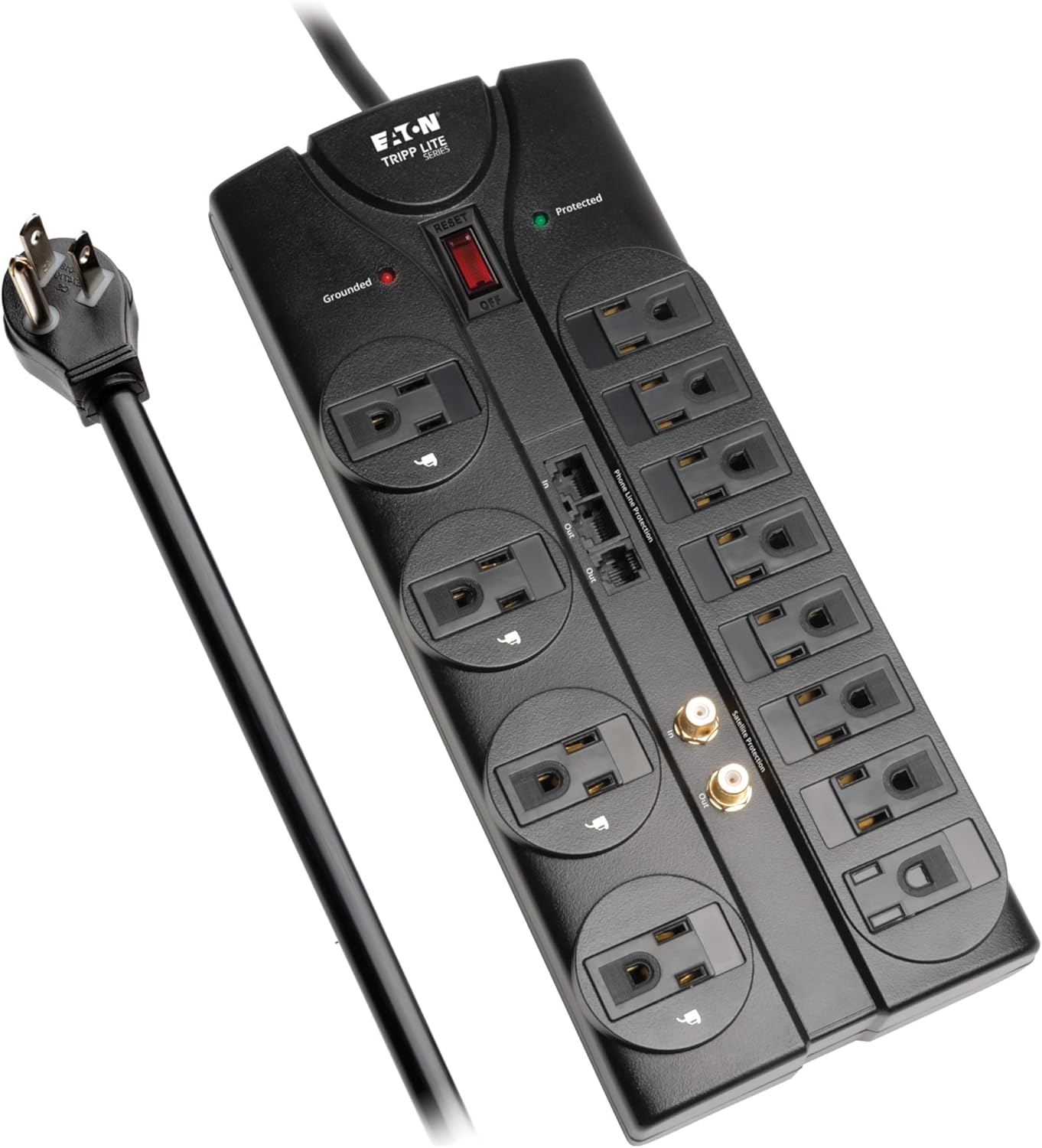
Eaton Tripp Lite TLP1208SAT Home Theater Surge Protector Power Strip, 12 Outlets, Flat Plug 8ft Extension Cord, 2880 Joules Coax, RJ11 and RJ45 Port for Phone, TV, WiFi Router, & Ethernet Protection
TRIPP LITE In Stock

Eaton Tripp Lite TLP1208SAT Home Theater Surge Protector Power Strip, 12 Outlets, Flat Plug 8ft Extension Cord, 2880 Joules Coax, RJ11 and RJ45 Port for Phone, TV, WiFi Router, & Ethernet Protection

APC UPS Battery Backup for Power Outages, 600VA/330W Surge Protector, 7 Outlets, USB Charging, BE600M1 Uninterruptible Power Supply for Computers, Wi-Fi Routers, and Home Office Electronics
APC In Stock

APC UPS Battery Backup for Power Outages, 600VA/330W Surge Protector, 7 Outlets, USB Charging, BE600M1 Uninterruptible Power Supply for Computers, Wi-Fi Routers, and Home Office Electronics

Protect Your Electronics Investment

Protect your entertainment investment with proper surge protection. Browse our recommended surge protectors and UPS systems for home theater applications.

Get Free Quote Book Now