Field notes from Torrance installs
Torrance splits cleanly by era. Old Torrance, the 1912 Olmsted-planned core, holds original Craftsman homes with lath-and-plaster over old-growth wood-frame studs, walls that drill slowly and crack if rushed. The post-war tracts of Southwood and West Torrance are 1950s wood-frame ranch: stucco outside, wood studs, drywall or thin plaster inside, the easiest Torrance walls to mount. The coastal Hollywood Riviera adds bluff-top mid-century homes with marine salt-air exposure.
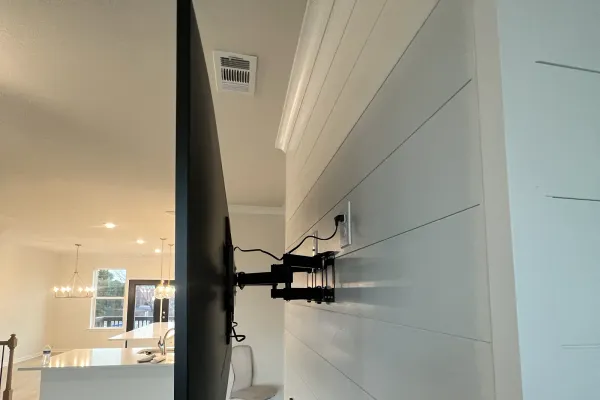
Two facts govern every Torrance job. First, it is wood-stud framing behind nearly every wall, so your installer anchors to studs with lag bolts, dropping to heavy toggles only when a small set has to sit between studs, and drilling low and slow on Old Torrance lath-and-plaster with the wall taped to control dust. Second, the bigger the TV, the more framing it needs: double-stud plates on large sets and a verified safety catch so the panel cannot walk off the bracket. In the Hollywood Riviera, anything exposed to coastal air gets 316 stainless corrosion-resistant hardware.
TV mounting prices in Torrance
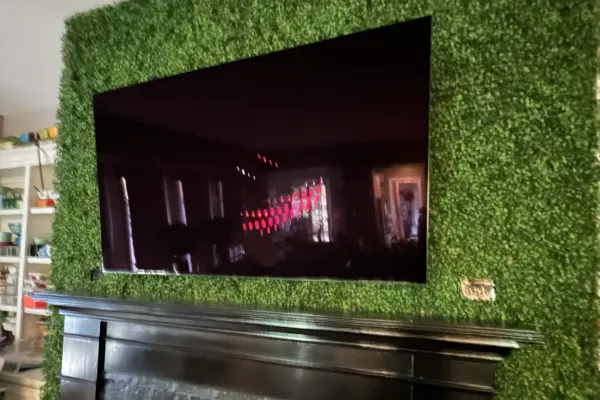
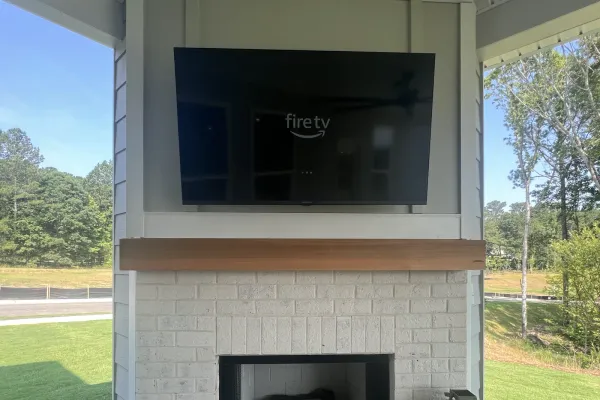
Torrance TV mounting starts at $129 (basic up to 54”), $159 (large 55-69”), $209 (XL 70-79”), $299 (XXL 80-99-inch), $399 (XXXL 100-inch+). Cable concealment $99/TV. Standard wood-frame drywall walls carry no surcharge; Old Torrance lath-and-plaster costs the same, only slower, while a full brick chimney carries the +$99 masonry surcharge. Your bracket stays separate from these rates, whether you bring one or buy it from us.
How Express Mounting covers Torrance
Alex Crabinsky founded Express Mounting in Atlanta in 2015. That start led to 9,747+ documented installs. Torrance jobs run through vetted Los Angeles County installers who carry the same hardware, work off the same install checklist, and back every job with the same 3-year workmanship warranty. We send a vetted local pro who reads how 1912 Old Torrance lath-and-plaster and the 1950s Southwood wood-frame ranches behave before they arrive.