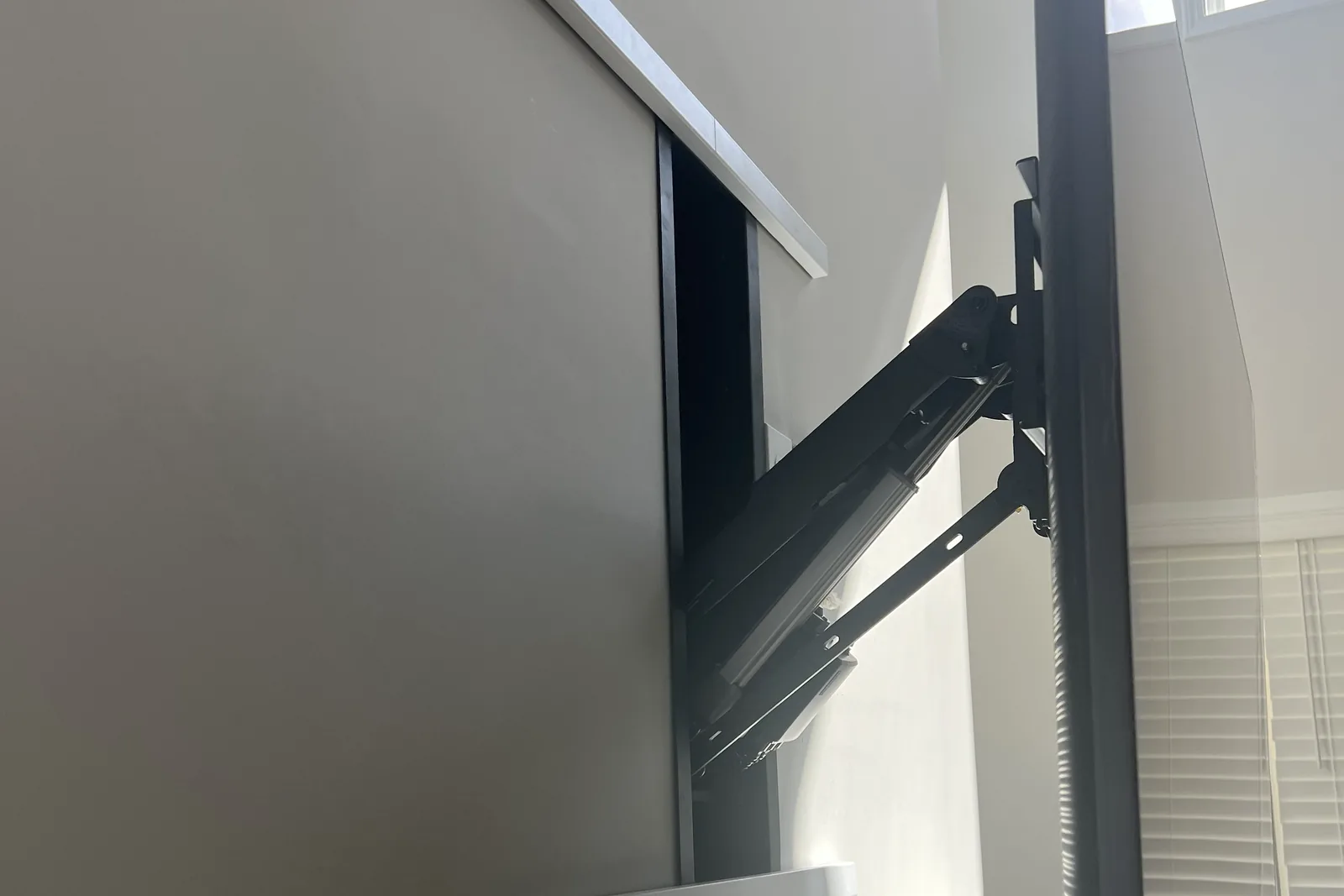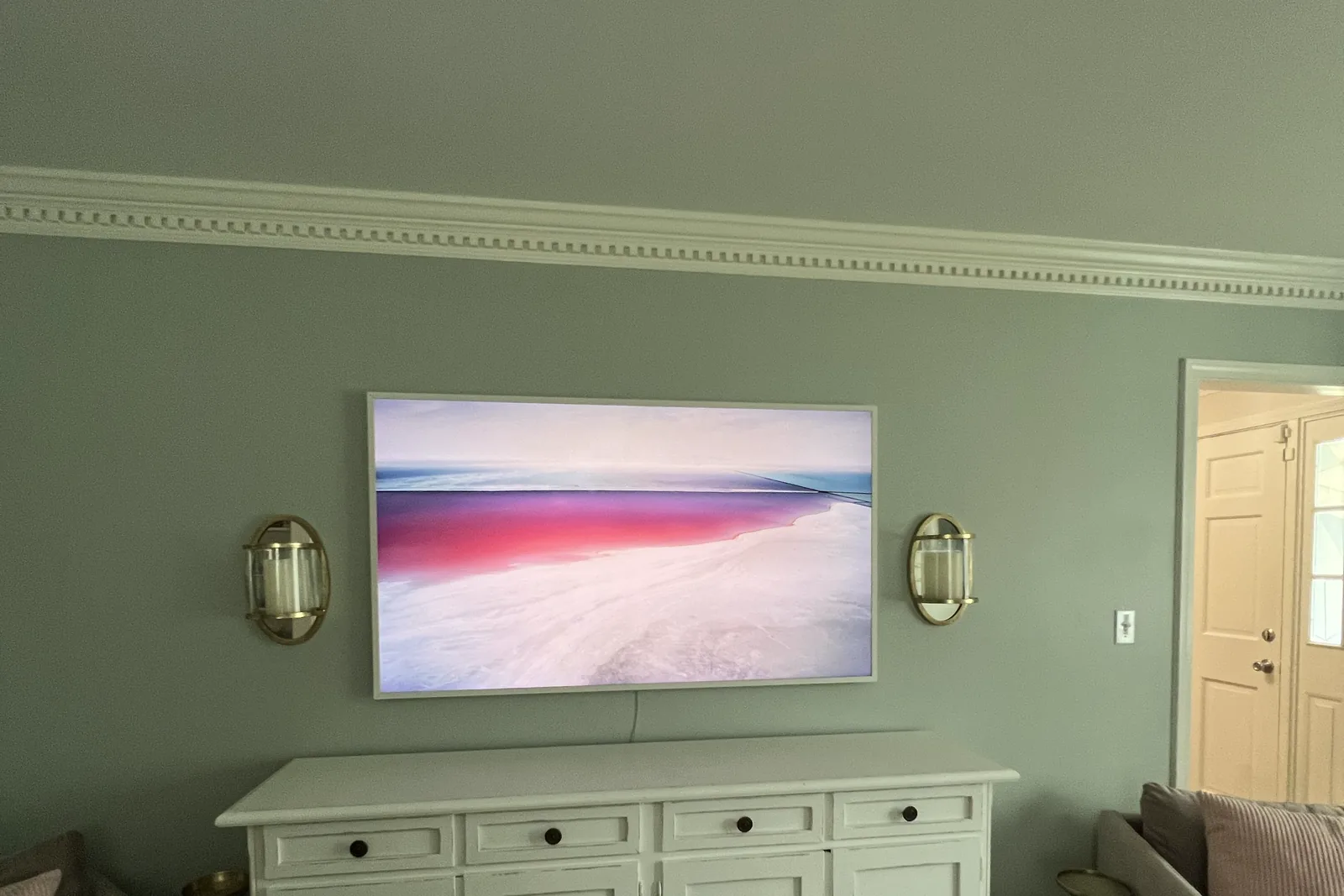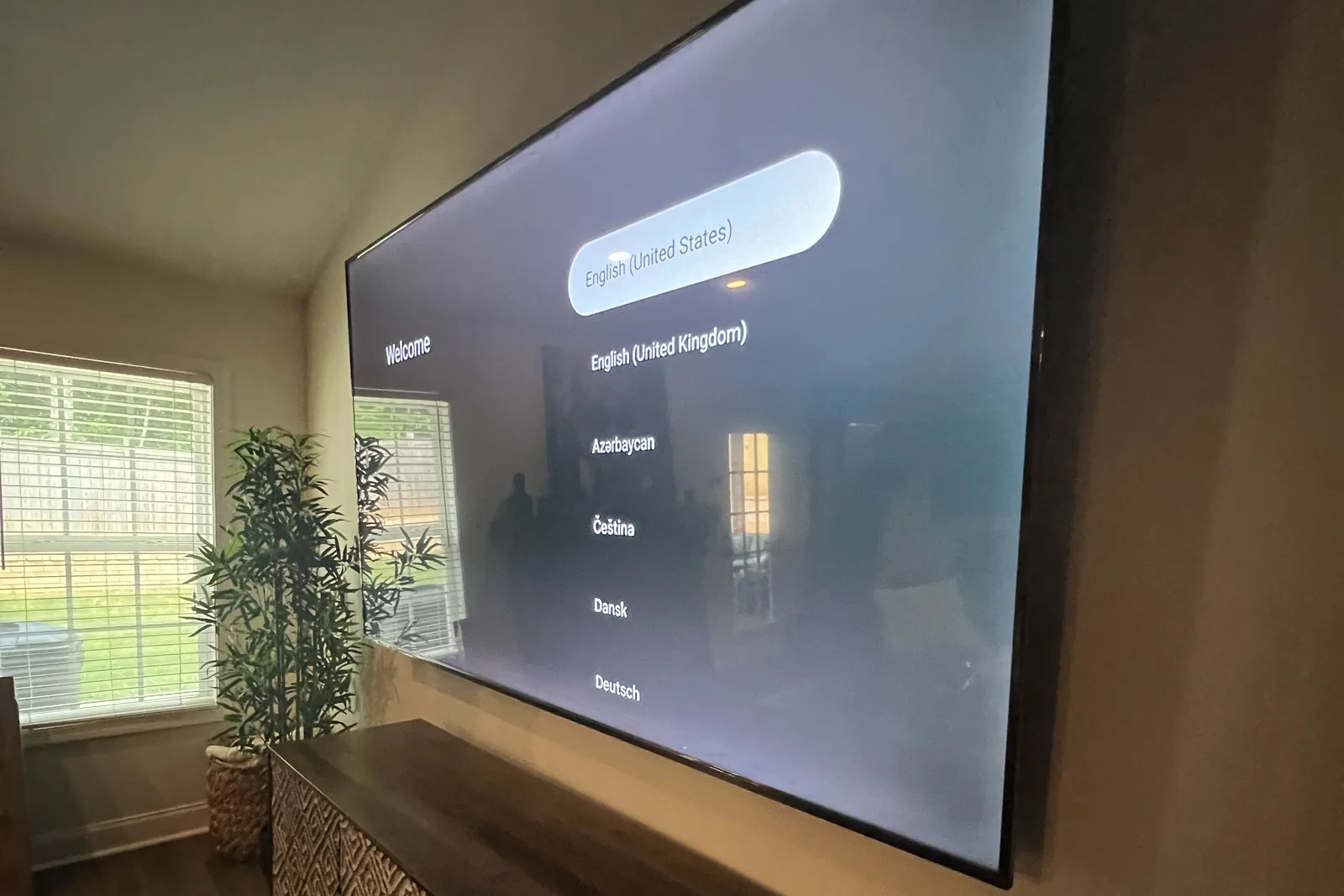
To hide TV wires inside the wall the right way, you run the low-voltage cables (HDMI, optical, ethernet) straight through the cavity, but you cannot run a standard TV power cord through the wall - that violates NEC Article 400. The code-compliant fix is an in-wall power relocation kit (PowerBridge, DataComm, and Sanus all make them): it installs a new powered outlet behind the TV, fed from the existing wall outlet through in-wall-rated cable, so nothing but approved wiring sits inside the wall. After 9,747+ installs, the in-wall power kit is the cleanest concealment on drywall with wood studs, and the part most DIYers get wrong is trying to bury an extension cord.
Quick note: This page contains Amazon affiliate links. We may earn a small commission at no extra cost to you if you buy through them. Our picks are the hardware our crews install on real customer walls, not spec-sheet guesses.
A wall-mounted TV with a power cord dangling down ruins the whole look. The good news is that hiding the wires completely is a well-defined process. The important news is that there’s a right way and a code-violating way, and the difference is a fire-safety issue, not an aesthetic one. Here’s the full in-wall method, the gear, and the line where a DIY job should become an electrician’s job.
The two kinds of TV wire (and why it matters)
Behind every mounted TV there are two completely different categories of cable, and they follow different rules:
- Low-voltage signal cables - HDMI, optical audio, ethernet, coax. These are safe to run directly through the wall cavity. No special permission, no code drama.
- Line-voltage power - the TV’s power cord, carrying 120V. This is the one you cannot simply drop through the wall.
Mixing these up is the single most common in-wall mistake, and it’s the reason in-wall power relocation kits exist.
The code rule you cannot skip
A standard TV power cord (the molded plug-and-cord that comes in the box) is a flexible cord, and NEC Article 400 prohibits running flexible cords through walls, floors, or ceilings as a substitute for permanent wiring. It’s a fire-code issue: in-wall heat buildup and the lack of overcurrent protection make a buried extension cord a genuine hazard, and it will also flag on a home inspection.
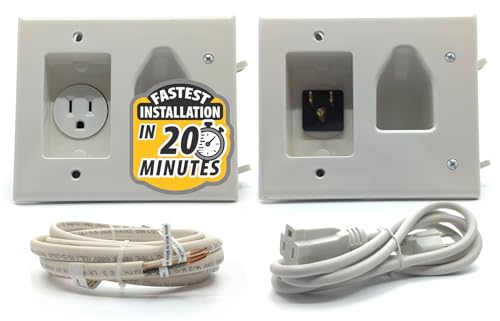
The legal way to get power behind a mounted TV is an in-wall power relocation kit. It provides two boxes - a powered “in” box that taps the existing outlet near the floor, and a recessed “out” box behind the TV - connected by code-rated in-wall cable. You’re not running a cord through the wall; you’re installing a short run of approved residential wiring with a new receptacle.
In-wall concealment methods compared
| Method | Look | Drywall cutting? | Renter-safe? | Best for |
|---|---|---|---|---|
| In-wall power relocation kit | Fully invisible | Yes (2 small boxes) | No | Owned homes, drywall + wood studs |
| Surface raceway | Visible but paintable | No | Yes | Rentals, masonry, quick jobs |
| Behind-furniture routing | Hidden by the stand | No | Yes | TVs with a console below |
This guide covers the in-wall kit. If you rent or have a masonry wall, the surface raceway is your method - see the renter-friendly raceway guide and the apartment cable guide. For an HDMI-and-power-only overview, our hide HDMI and power cables guide breaks down all three methods.
Tools and materials
- In-wall power relocation kit - the core item. A PowerBridge or DataComm in-wall power kit includes both boxes, the rated cable, and the cover plates.
- Drywall saw - a jab saw for cutting the two box openings.
- Fish tape or glow rods - a fish tape to pull cables down the cavity.
- Stud finder with AC and pipe detection - confirm the cavity is clear before cutting. A multi-mode stud and wire detector prevents drilling into a pipe or live wire.
- Low-voltage HDMI - run a fresh, long in-wall-rated (CL2/CL3) HDMI cable so the run is clean.
Step-by-step: in-wall cable concealment
- Plan the two box locations. One behind the TV (the “out” box) and one near the existing floor outlet (the “in” box), ideally in the same stud bay so the cable drops straight down.
- Scan before you cut. Run a multi-mode detector over both spots to confirm no pipes, ducts, or live wires are in the cavity. Drilling blind is how people hit plumbing.
- Cut the openings. Trace the kit’s template, then cut both holes with the jab saw. Check for horizontal fire blocks inside the bay - older homes sometimes have one mid-wall that you’ll need to work around.
- Fish the cables. Drop the fish tape from the top box to the bottom, attach the HDMI and the kit’s in-wall power cable, and pull them up. Keep bend radii gentle.
- Install the power kit boxes. Mount the recessed boxes, connect the kit’s rated cable to the supplied receptacle (the “out” box) and the plug-in module (the “in” box). The “in” box simply plugs into your existing outlet - no hard-wiring required on most consumer kits.
- Mount the TV over the out box. Make sure the bracket clears the recessed box. The full mounting sequence is in our how to mount a TV guide.
- Plug in and test. Power the TV through the new outlet, confirm the HDMI signal, and dress any slack behind the console.
Most plug-in style kits are DIY-friendly because the “in” box uses the existing outlet by plug, not by splicing into house wiring. The moment a job requires adding a brand-new circuit or hard-wiring into the panel, it stops being a DIY job (see below).
When to call an electrician
Call a licensed electrician if any of these apply: there’s no existing outlet near the TV to tap, you want a dedicated circuit, the wall is balloon-framed or has unexpected blocking, or you’re uncomfortable working around the existing receptacle. A plug-in power relocation kit is homeowner-rated; adding new line-voltage circuits is licensed work in every state.
Express Mounting handles in-wall concealment as part of our flat-rate installs: $99 per TV for a fully recessed, code-compliant kit, or $79 for a paintable surface raceway where the wall can’t be opened. See the pricing page or run the numbers on the price estimator, then book online or call (470) 777-4077. We cover Atlanta plus dispatched installers in twelve more metros.
Frequently asked questions
How do you hide TV wires in the wall?
Run the low-voltage cables (HDMI, optical, ethernet) directly through the wall cavity, and use an in-wall power relocation kit for the power. The kit installs a recessed outlet behind the TV that taps your existing wall outlet through code-rated in-wall cable, so the power cord never has to run through the wall. You cut two small boxes, fish the cables between them, and mount the TV over the upper box.
Can I run a TV power cord inside the wall?
No. A standard TV power cord is a flexible cord, and NEC Article 400 prohibits running flexible cords through walls as permanent wiring. It is a fire hazard and fails home inspections. Use an in-wall power relocation kit (PowerBridge, DataComm, or Sanus), which provides a code-compliant recessed outlet instead.
Is an in-wall power kit hard to install?
Plug-in style kits are DIY-friendly: the lower box plugs into your existing outlet rather than splicing into house wiring, so there’s no hard-wiring involved. The work is cutting two openings, fishing the cables, and mounting the boxes - about 30-45 minutes added to a standard install. If there’s no nearby outlet or you need a new circuit, that part requires a licensed electrician.
Can I hide TV wires in the wall in a rental or on brick?
Not the in-wall way. Cutting drywall isn’t renter-friendly, and brick or concrete can’t be fished like a hollow stud bay. For both, use a paintable surface raceway instead - it hides the cables, paints to match, and on rentals it removes without damage.
What cables can safely go in the wall?
Low-voltage signal cables - HDMI, optical audio, ethernet, and coax - can run directly through the wall, ideally using in-wall-rated (CL2 or CL3) versions. Line-voltage power is the exception and must use an in-wall power relocation kit rather than a standard cord.