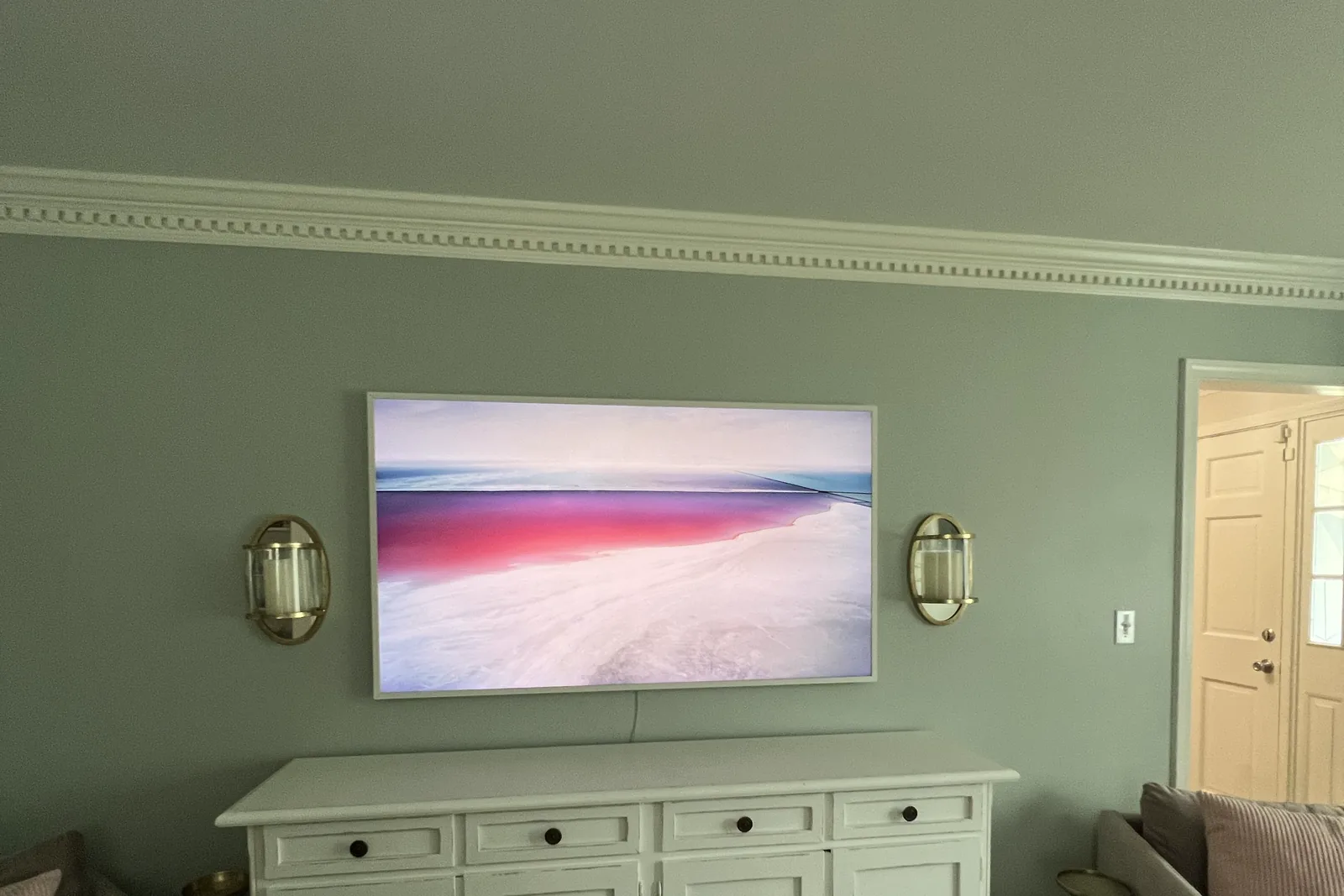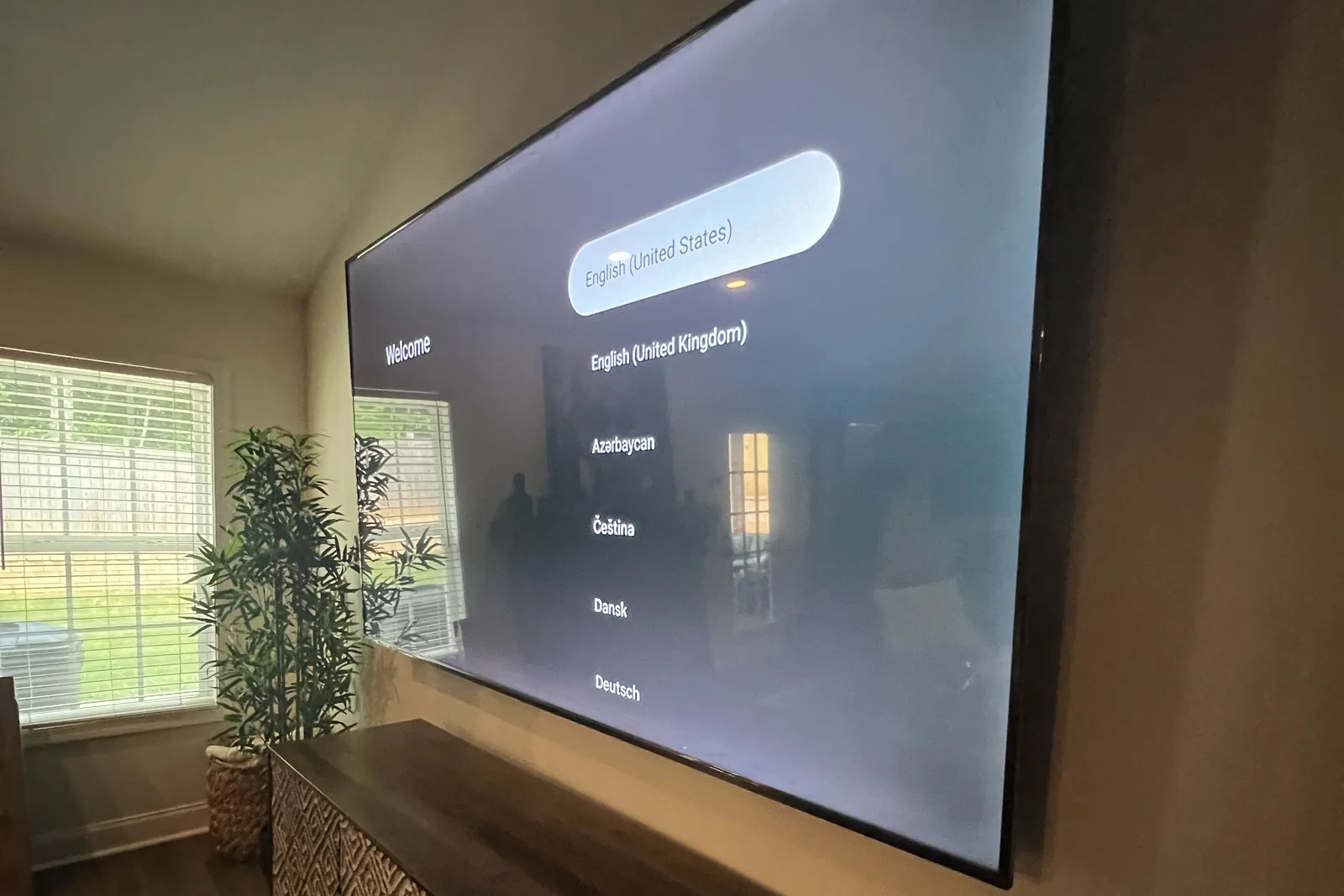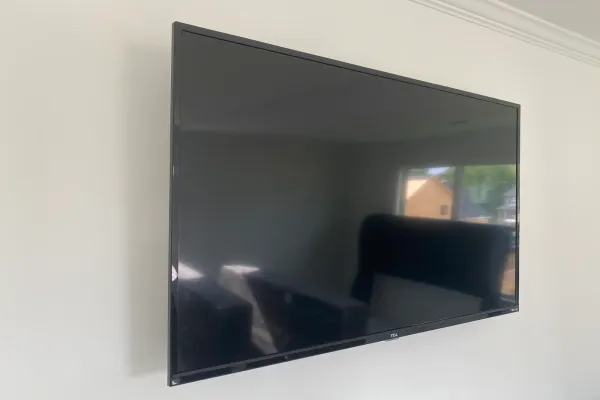
Frame TVs sell the same promise in every brand’s brochure - a screen that reads as framed art - and delivering that promise on Los Angeles walls is mostly about two things the brochure never mentions: how flat your wall actually is, and whether the panel stays put when the ground moves. Install pricing is our standard $129-$399 flat rate. We mount Samsung Frame TVs, Hisense CanvasTV, TCL NXTFRAME and LG gallery OLEDs, and in LA the hard part is rarely the cable (wood-frame walls hide cables easily). It’s the 1920s plaster that can bow a half inch across the mounting span.
From Hancock Park Spanish Revivals to Playa Vista new-builds, LA’s wall variety decides how each frame TV install goes. This guide covers what flush really requires on each wall type, the quake-retention detail unique to mounting “art” in Southern California, and the recessed-power trick that separates a good frame install from a perfect one.
Flush against which wall, exactly?
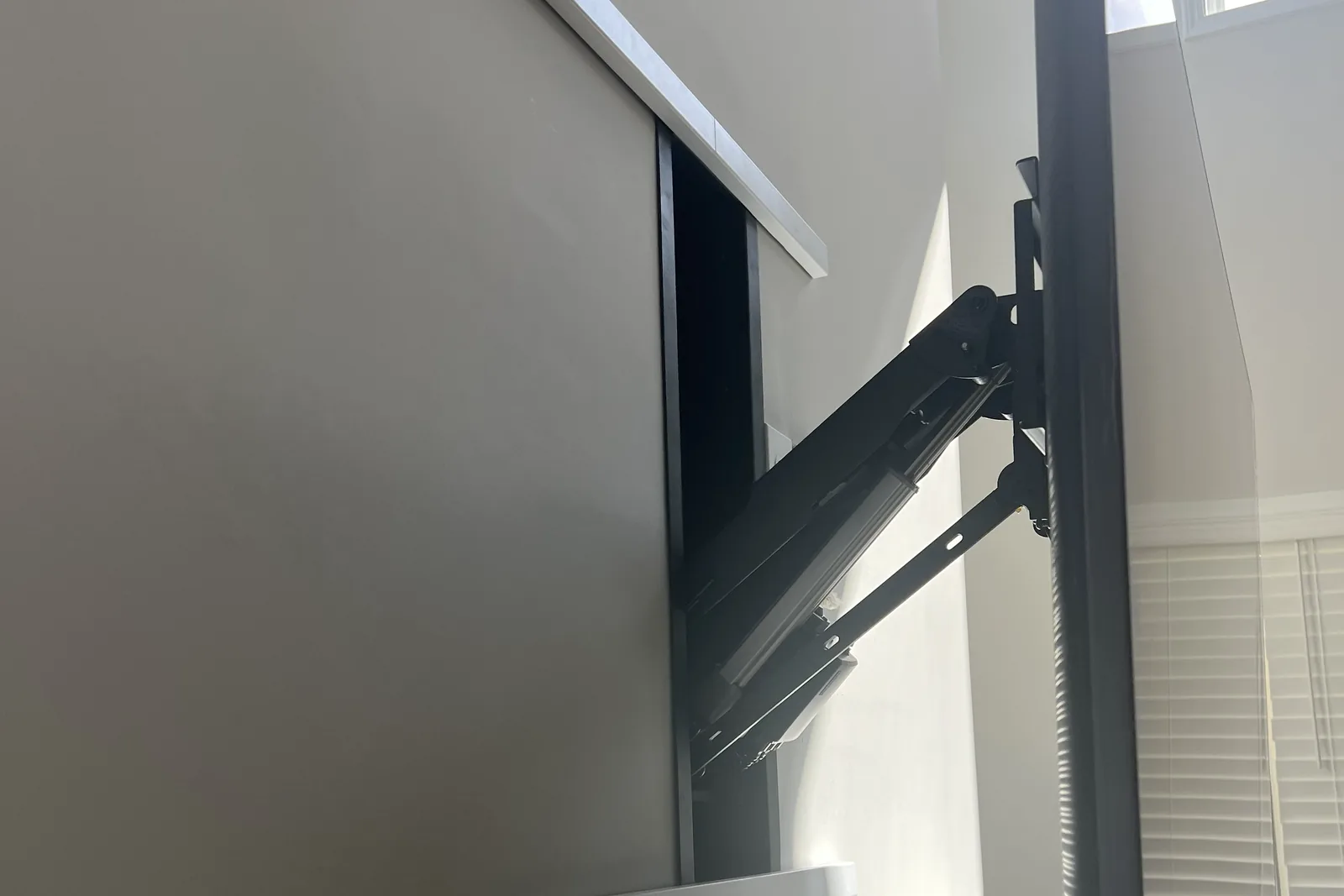
Every frame brand ships a slim mount engineered to pull the panel within millimeters of the wall. Whether those millimeters happen depends on the wall:
| LA wall type | Where you find it | Flush outcome |
|---|---|---|
| Drywall over wood studs | Post-1950 houses, the Valley, Westside | The ideal case - flat, cavity for cables, lags into studs |
| Lath-and-plaster | Pre-1940 - Pasadena, Hancock Park, West Adams, Hollywood | Flush after shimming; plaster bows and crowns |
| Drywall over metal studs | DTLA, Culver City, Playa Vista podium buildings | Flush with snap-toggles through the steel: about 100 lb on four, 150 lb on six |
| Brick or block (chimney breasts) | Older fireplaces, some Long Beach builds | Flush with Tapcons in the brick face or mortar joint, whichever lines up with the holes, + $99 masonry surcharge |
The wood-stud case is why LA is a great frame-TV market: most walls here have a cavity behind them, which makes the invisible-cable part of the illusion cheap. The plaster case is why we bring shims and a long level - more on that below.
The brands, briefly
The full brand-by-brand mounting breakdown lives in our Miami frame TV guide, and the Samsung steps (the in-box Slim Fit mount, the One Connect box, the height) are in how to mount a Samsung Frame TV. The short LA-relevant version:
- Samsung The Frame - Samsung’s slim no-gap wall mount ships in the box with current Frame TVs (Samsung also sells replacements such as the WMN-A50EB and WMN-A65EB; match one to your model number), with the One Connect box keeping every input off the panel. One slim cable to hide; the box needs a ventilated cabinet within reach.
- Hisense CanvasTV - slim flush bracket included, matte anti-glare screen, conventional connections at the panel.
- TCL NXTFRAME - flush bracket included, conventional connections.
- LG gallery-design OLED (G-series) - zero-gap bracket with most sizes, the picture-quality pick, conventional cabling.
All four install at the same flat rate with customer-supplied hardware - the mount engineering is already in the box, which is one bracket decision you don’t have to make.
The leveling problem old LA walls create
A regular TV forgives a wall that bows; a frame TV doesn’t, because your eye reads it as a picture frame and picture frames are supposed to hang flat and level. Pre-war LA plaster - the beautiful stuff in Spanish Revivals and Craftsmans - bows, crowns, and wanders off plumb by amounts you’ve never noticed until a 65-inch rectangle makes them visible:
- We map the wall first. A straightedge across the mounting span shows the bow before the mount goes up. A half-inch crown in 1920s plaster is normal, not a defect.
- Shimming the mount plate takes the bow out so the panel sits flush AND flat - flush to the high spot, shimmed at the lows.
- Anchoring goes through plaster into studs with long lags, the slow careful method from our plaster stud-finding guide. Plaster takes drilling patience; it repays it by holding paint and texture no drywall can match.
- Final level is set to the room, not the bubble - in a 96-year-old house the floors and ceilings aren’t level either, and a frame TV trued to a sloping picture rail reads straighter than one trued to gravity. We split the difference deliberately and show you before tightening down.
The recessed-outlet upgrade
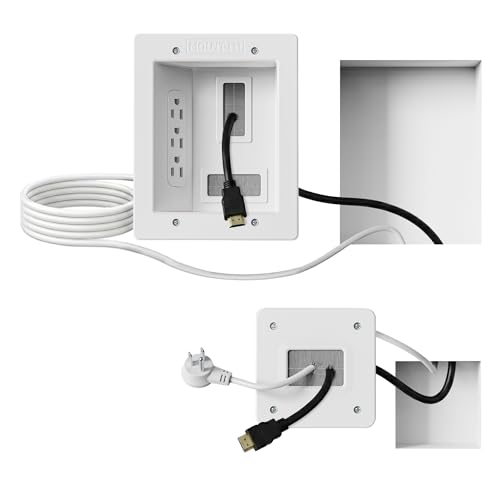
The detail that separates good from perfect: a recessed TV outlet placed directly behind the panel. Standard outlets hold plugs that stick out past the frame mount’s depth budget; a recessed box buries the connection in the wall cavity so nothing pushes the panel off the wall. In wood-frame LA walls this is a clean add during install - a recessed power kit plus the in-wall routing below. With Samsung’s One Connect that recessed point carries the single slim cable; with the other brands it carries power and HDMI together.
Quick note: This page contains Amazon affiliate links. We may earn a small commission at no extra cost to you if you buy through them. Our picks are the hardware our crews install on real customer walls, not spec-sheet guesses.
Cables in wood-frame walls: the easy part
Miami hides frame-TV cables despite its walls; LA hides them because of its walls. Most LA mounting walls are wood-framed with a cavity, so:
- In-wall concealment ($99) drops the cable run inside the wall with a code-compliant power bridge - the standard method from our in-wall cable guide, and the NEC power-cord rule from our HDMI and power hiding guide applies as always.
- Fire blocking is the wrinkle in older LA framing - horizontal blocking mid-wall stops a straight drop. We find it with the stud finder before cutting, and route around it through the same access holes.
- Metal-stud podium buildings work the same as condo metal-stud installs - in-wall routing is usually clean, the weight cap is the constraint.
- Renting in LA? The landlord-permission and deposit-safe playbook from our LA apartment mounting guide applies doubly to frame TVs, since in-wall work needs written approval.
Quake retention for a TV pretending to be art
LA is earthquake country, and frame TVs add one specific concern: several flush-mount systems hang the panel on cleats or hooks to achieve their slim profile, and a hook is exactly what you don’t want holding electronics in ground motion unless it locks. Our frame-install standard:
- Positive retention engaged - the locking tabs and safety screws these mounts include get installed, not left in the parts bag. The panel can’t lift off its cleat mid-shake.
- Into-stud or into-masonry anchoring, pull-tested to twice panel weight - the same standard as every install we dispatch in California.
- No added wall art above seating without the same treatment - worth saying because frame TVs invite gallery walls around them; heavy framed pieces over a sofa deserve quake-rated hangers too. The TV will be the safest thing on that wall.
What it costs in LA
- Base install: $129 (up to 54”), $159 (55-69”), $209 (70-79”), $299 (80-99”), $399 (100”+). The brands ship their own slim mounts, so there’s no bracket line.
- Plaster walls: no surcharge; slower, shimmed, done right at the same rate
- Masonry (chimney breasts, block): $99 surcharge
- In-wall concealment: $99, including the recessed in-wall power kit
- Bezel fitting and art-mode setup: part of the install
- Soundbar below: $79
A 65-inch Frame with the One Connect cable hidden in the wall comes to $159 + $99 = $258.
Metro-wide numbers live in the LA cost guide. Dispatch covers LA County, Orange County, and the Inland Empire - city pages include Beverly Hills, Pasadena, and Irvine, with the overview on the Los Angeles metro page. The price estimator gives a real number. Bookings before noon get same-day service, subject to the day’s schedule, and the installer arrives within 2-4 hours of confirmation: (470) 777-4077 or get a free estimate.
Frequently asked questions
Which frame TVs do you install in Los Angeles?
All of them: Samsung The Frame with its slim no-gap mount and One Connect box, Hisense CanvasTV, TCL NXTFRAME, and LG’s gallery-design OLEDs. Each brand includes its own slim flush-mount system, so the install uses the engineering in the box at our standard $129-$399 flat rate.
Can a frame TV hang flush on old plaster walls?
Yes. Plaster bows and crowns, so we map the wall with a straightedge, shim the mount plate flat, and anchor through the plaster into studs with long lag bolts drilled patiently. No surcharge applies; it’s the same flat rate done more carefully.
What is a recessed TV outlet and do I need one?
A recessed outlet buries the power connection inside the wall cavity so plugs don’t push the panel away from the wall. Frame mounts have almost no depth budget, so it’s the difference between nearly flush and truly flush. In LA’s wood-frame walls it installs cleanly alongside the $99 in-wall cable concealment.
Are frame TVs safe in earthquakes?
Mounted right, yes. The slim cleat-style mounts these TVs use get their locking tabs and safety screws engaged so the panel can’t lift off in ground motion, anchoring goes into studs or masonry, and every install is pull-tested to twice the panel’s weight.
Does frame TV installation cost more than regular TV mounting?
No - the flat rate is the same $129-$399 by size, because the brands include the specialty mount in the box. Where frame installs typically add cost is the finish work that completes the illusion: $99 in-wall cable concealment (which includes the recessed in-wall power kit) and, optionally, a $79 soundbar. A 65-inch Frame with the cable hidden is $159 + $99 = $258.