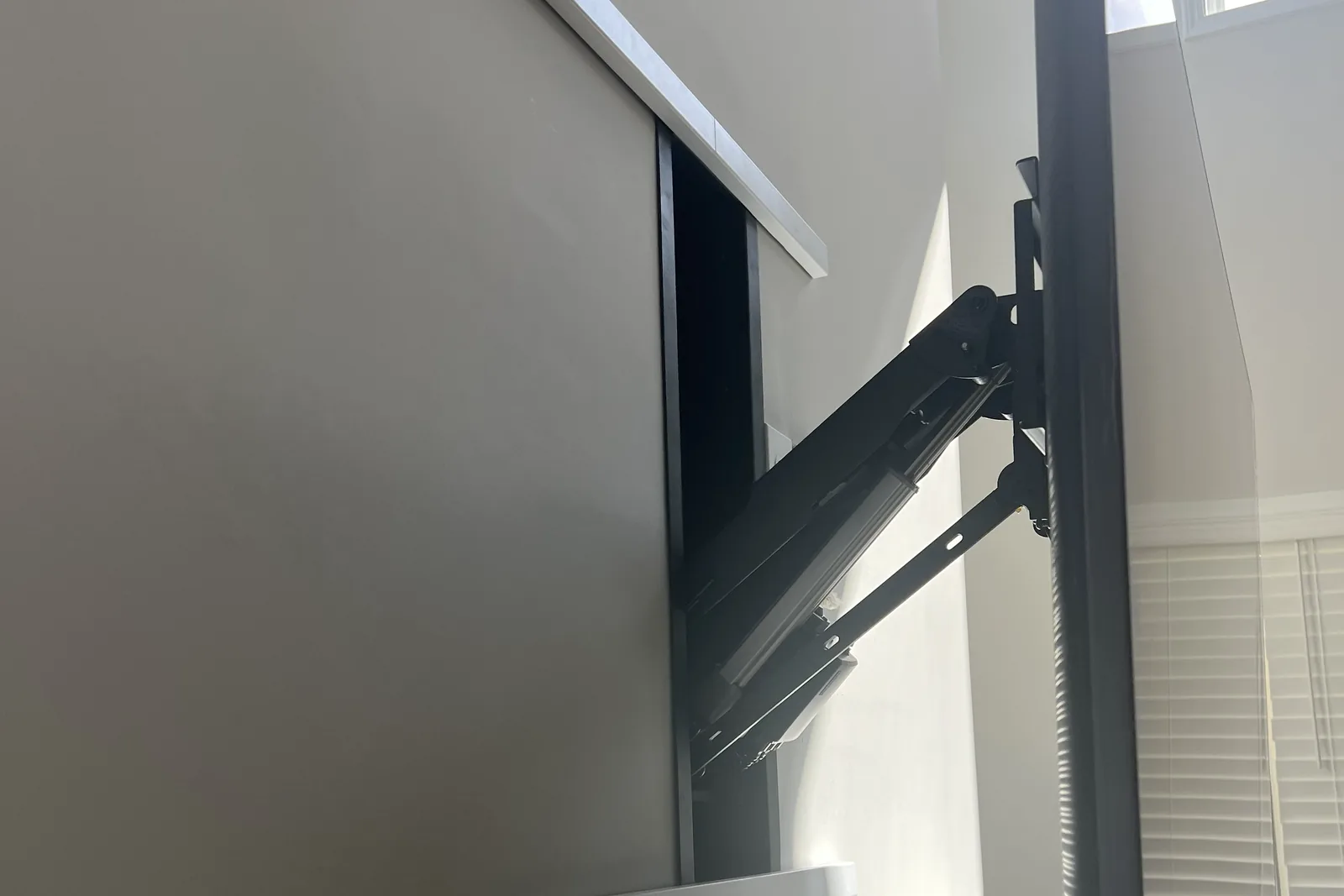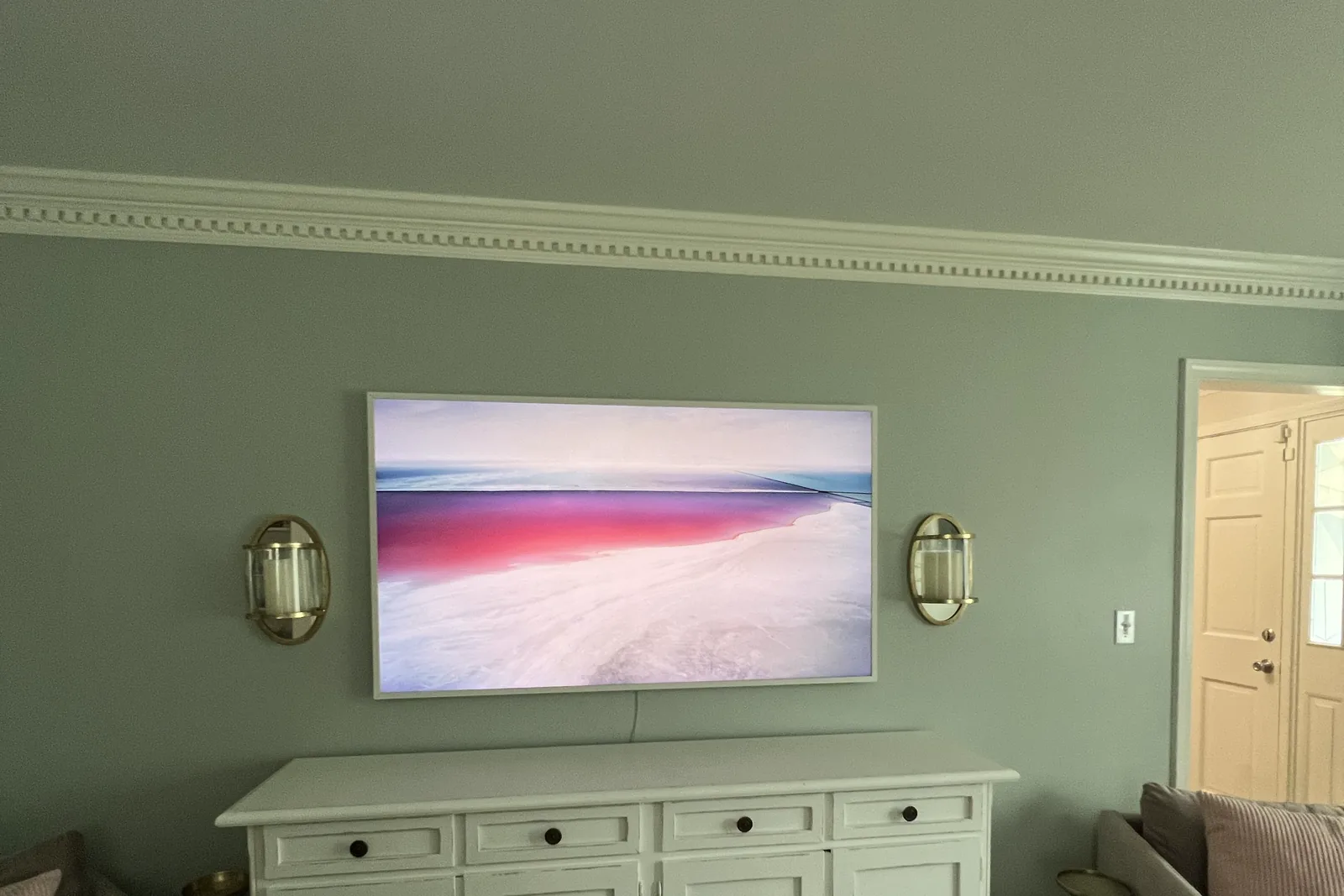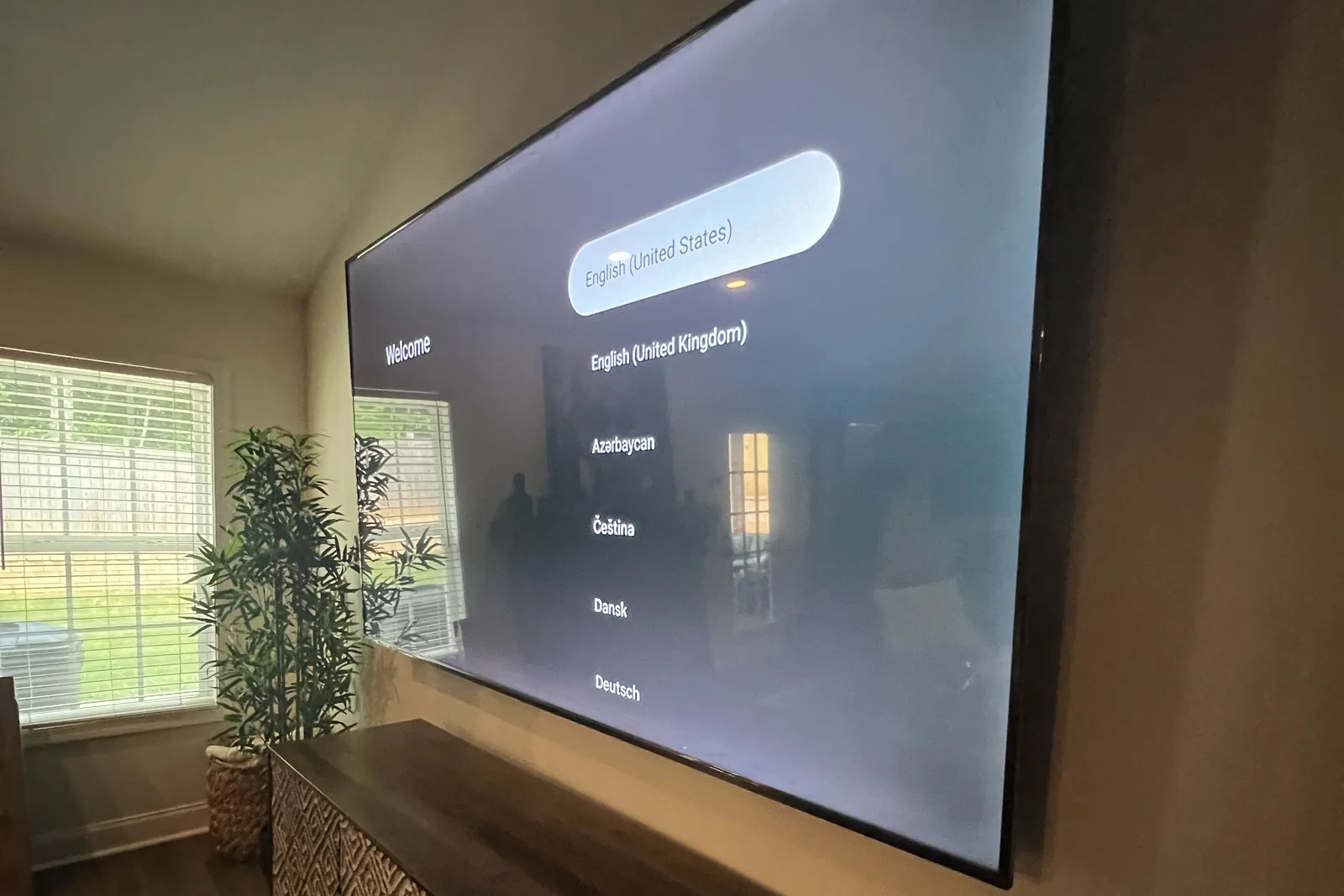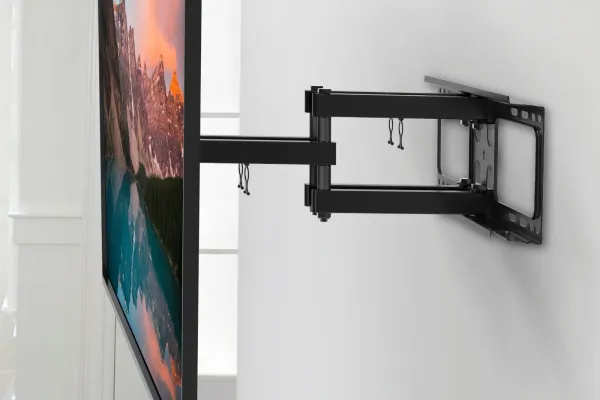
You can mount a TV in an apartment without losing your deposit, and you have three realistic paths: anchor into the wall studs with lag bolts (the small holes patch in minutes and most leases allow it), use a no-drill solution like a floor-standing TV stand or tension-pole mount (zero holes), or get written landlord permission first. The one thing to avoid is hanging a TV on plastic drywall anchors alone: they leave 2-inch holes that need real drywall repair and still risk dropping the TV. Drywall alone holds only about a 32-inch, 30-lb TV on rated toggles; anything bigger needs a stud. After 9,747+ installs, many of them in rentals and high-rises, stud mounting with patchable holes is almost always the renter-smart choice.
Quick note: This page contains Amazon affiliate links. We may earn a small commission at no extra cost to you if you buy through them. Our picks are the hardware our crews install on real customer walls, not spec-sheet guesses.
Renters get told two opposite myths: that you can’t mount a TV at all, or that a pack of $5 drywall anchors will hold a 65-inch screen. Both are wrong. The reality is that a stud-mounted TV leaves smaller, easier-to-patch holes than a picture frame’s worth of anchors, and a couple of no-drill options exist for leases that forbid drilling entirely. Here’s how to do it without a damage charge.
Can you mount a TV in an apartment?
Almost always, yes. Most standard leases allow “small nail or screw holes” for hanging items, and a TV bracket’s lag-bolt holes are smaller than you’d think: typically four holes about the width of a pencil. What leases actually care about is unrepaired damage at move-out, not whether you drilled. The few leases that explicitly prohibit any drilling are the exception, and even those usually bend with a quick written request.
The move that gets renters in trouble is not drilling - it’s anchoring a heavy TV into hollow drywall with plastic anchors, which can rip out and leave a crater (plus a broken TV). Mount into studs and the holes are small and clean.
Before you start, read your lease’s “alterations” or “decorating” clause and snap a quick photo of the bare wall. If the lease is silent on small holes (most are), a short email to your property manager asking to mount a TV - and confirming you’ll patch on move-out - almost always gets a yes, and it puts the permission in writing if there’s ever a question about the deposit. Five minutes of paperwork beats a surprise charge a year later.
Your three renter options
| Method | Wall damage | Holds a 55”+ TV? | Cost |
|---|---|---|---|
| Stud mount with lag bolts | 4 small, patchable holes | Yes | Bracket $30-$120 |
| No-drill (floor stand / tension pole) | None | Yes (stand); limited (pole) | $80-$250 |
| Drywall anchors only | Larger holes, high risk | No: Drywall alone holds only about a 32-inch, 30-lb TV on rated toggles; anything bigger needs a stud | Cheap, but only for small TVs |
The first two are the renter-smart choices. The third is the one to skip, no matter what a product listing claims.
The damage-free method: stud mounting
Counterintuitive but true: drilling into studs does less repairable damage than the alternatives. Here is the renter-safe process.
- Find the studs. Use an electronic stud finder and mark both edges of two studs (usually 16 inches apart).
- Use lag bolts, not drywall anchors. Drive 3/8-inch by 3-inch lag bolts into the studs through the bracket. Four small holes total, all into wood.
- Pre-drill a 1/4-inch pilot hole for each lag bolt so you don’t split the stud or crack the paint.
- Level and hang. A full-motion or fixed bracket both work; the full process is in our how to mount a TV guide.
- Keep the bolts. When you move out, the four holes patch with a dab of spackle and touch-up paint in about ten minutes.
For metal-stud high-rises (common in Miami and LA towers), the hardware changes to snap-toggle bolts - see our metal stud mounting guide for weight limits.
No-drill options for strict leases
If your lease genuinely forbids drilling, you have two real options and one to avoid:
- Floor-standing TV stand - a freestanding pole or tripod base that puts the TV at mount height with zero wall contact. The cleanest no-damage answer for large TVs.
- Tension-pole / floor-to-ceiling mount - holds the TV between the floor and ceiling with spring tension. Works for mid-size TVs in rooms with standard ceiling heights.
- What to skip: adhesive or suction “no-drill wall mounts.” They will not safely hold a TV over time. Our no-drill mounting guide covers which no-drill systems are actually load-rated and which are marketing.
A floor-standing TV stand is the option I recommend most for renters who truly can’t drill. It moves with you and damages nothing, and our floor stand picks for renters match stands to TV size and weight.
Hiding the cables without cutting drywall
In-wall cable concealment requires cutting the drywall, which is not renter-friendly. The damage-free answer is a surface raceway: a paintable channel that sticks to the wall, hides the cables, and peels off cleanly at move-out. We cover the full method in our renter-friendly cable concealment guide and the broader raceway guide.
If you ever do own the place and want the cables fully invisible inside the wall, that’s a different project - see how to hide TV wires in the wall. A paintable raceway kit is the renter-safe pick, and if you’d rather we fit it, a raceway install is $79 per TV.
The reason in-wall is a bigger job than it looks is the cable itself, not the drywall. Low-voltage runs such as HDMI, Ethernet and speaker wire have to carry a CL2 or CL3 rating to be approved for in-wall use under the National Electrical Code, published as NFPA 70. A standard TV power cord carries no such rating and is not permitted inside the wall, which is why the compliant route to power is a recessed in-wall power kit rather than dropping the factory cord down the cavity. Renters rarely need any of this, but it is worth knowing before you agree to let someone “just run it through the wall” in a place you own.
How to patch the holes when you move out
This is the step that protects your deposit, and it takes about ten minutes per wall:
- Remove the bracket and bolts (keep them with the TV).
- Fill each hole with lightweight spackle using a putty knife; slightly overfill.
- Let it dry, sand flush, and touch up with matching paint.
Four stud holes disappear completely. This is why stud mounting beats drywall anchors for renters - the holes are small, in solid wood, and trivial to repair.
Frequently asked questions
Can you mount a TV in an apartment?
Yes. Most leases allow small screw holes for hanging items, and a TV bracket’s four lag-bolt holes are small and easy to patch at move-out. The safest method is mounting into wall studs rather than relying on drywall anchors. If your lease forbids drilling entirely, a floor-standing TV stand gives you mount-height viewing with zero wall damage.
Will mounting a TV lose me my security deposit?
Not if you patch the holes. Stud-mounted bracket holes fill with spackle and touch-up paint in about ten minutes and disappear completely. Deposits get docked for unrepaired damage, not for the fact that you mounted a TV. The risk case is plastic drywall anchors, which leave large holes that need real drywall repair.
How do you mount a TV in an apartment without drilling?
Use a floor-standing TV stand or a floor-to-ceiling tension-pole mount - both hold the TV at viewing height with no wall holes. Avoid adhesive or suction “no-drill wall mounts,” which are not reliably load-rated for a TV. For cables, a paintable surface raceway hides the wires and peels off cleanly.
Can I mount a TV on an apartment wall with metal studs?
Yes, which is common in Miami and LA high-rises. Metal studs require snap-toggle or zip-toggle bolts instead of lag bolts, and they belong through the steel: four 1/4-inch snap-toggles carry a TV up to about 100 lbs and six carry about 150. A toggle that misses the stud is only a drywall anchor.
What’s the safest way to hide TV cables in a rental?
A surface-mounted, paintable cable raceway. It sticks to the wall over the cables, can be painted to match, and removes without damage when you move out. In-wall concealment is cleaner but requires cutting drywall, so it is owner-only territory.